
As the claims service has grown, so has the number of journeys and components used across it. This made it increasingly important that developers could easily understand what already existed before making changes or building something new.
In team retros it was mentioned that components were not always easy to find, which made it harder for developers to know whether something could be reused. This created a risk of duplicating work and introducing different approaches to solving similar problems.
To reduce this friction, one of our developers created a set of internal tools to make the service easier to understand, navigate and develop.
Bringing our development tools together
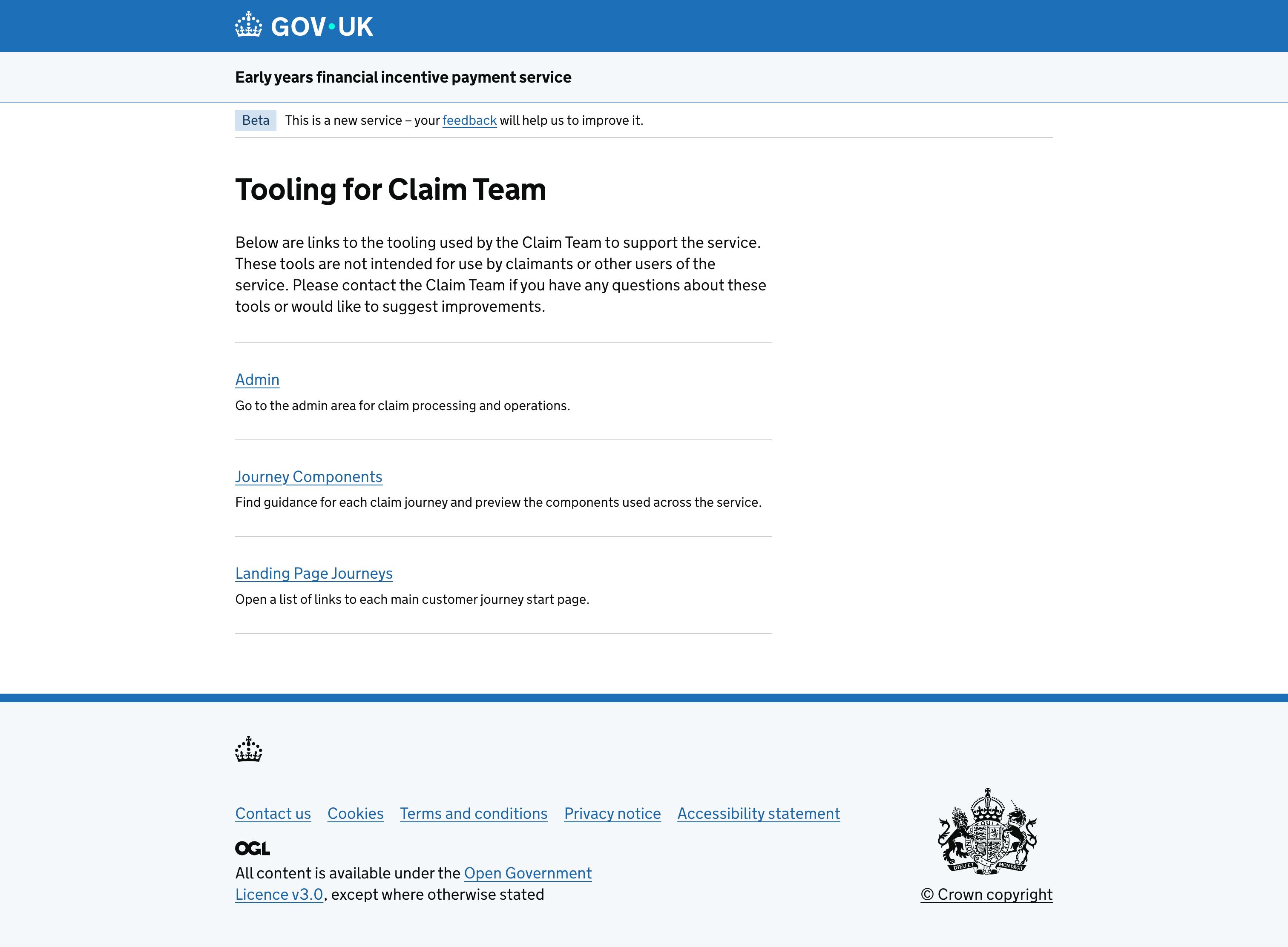
We created a central tooling page that gives the Claims Team quick access to useful resources for understanding and working with the service.
This includes links to:
- the admin area used for claim processing and operations
- journey components, where developers can find guidance and preview components used across the service
- journey landing pages, which provide direct access to the start of each main claimant journey
Rather than having to find individual pages or work out how to reach different parts of the service, these resources can now be accessed from one place.
Making components easier to find and reuse
As more claim journeys have been developed, we have created components and approaches that can potentially be reused elsewhere in the service.
Previously, these were not always easy to discover. This meant developers could spend time addressing a problem that had already been solved elsewhere or create a new version of something that could have been reused.
The journey components area brings these together so developers can see what already exists, preview how components work and understand where they could be reused.
This reduces duplication and helps us use more consistent approaches across different claim journeys.
Making journeys easier to understand
We also wanted to reduce the effort involved in navigating and understanding the different journeys within the service.
The landing page journeys tool provides direct links to the start of each main claimant journey. Developers can quickly move between journeys and understand how different parts of the service work without having to manually navigate through each one.
This is particularly useful when making changes that could affect more than one claim journey.
We have also found this useful for people joining the team.
For a new starter, understanding the different journeys, variations and reusable components within the claims service can take time. Having the main journeys and components available in one place gives people a way to explore the service themselves and understand how the different parts fit together.
Although the tooling was primarily created to support development, it has therefore also become a useful resource for onboarding and sharing knowledge across the team.
Designing for the people who build the service
Although these tools are not claimant-facing, they can still contribute to the quality of the service we provide.
Making journeys and components easier to find and understand reduces friction for developers, encourages reuse and helps prevent us from solving the same problem multiple times.
It also makes knowledge about how the service works more accessible. Instead of relying solely on individual team members to explain how journeys fit together, we now have tools that allow people to explore and understand the service themselves.
As the claims service continues to develop, we want the tooling around it to develop too. Improving the experience of the people who build and maintain the service makes it easier for us to make changes consistently and efficiently.