
While much of our research focused on teachers making claims, we also worked closely with the operational colleagues responsible for processing applications.
Understanding how claims are reviewed and assessed helped us design a service that works for both users and caseworkers.
Treating caseworkers as users
A successful claim journey does not end when a user submits their application.
Operational colleagues need to review information, assess evidence, and make eligibility decisions before a payment can be made.
To better understand these activities, we ran co-design sessions with members of the operations team and explored how they currently process claims.
This helped us identify areas where changes to the service could improve the experience for caseworkers while also supporting better outcomes for users.
Understanding what caseworkers need
Through our sessions, caseworkers told us they needed to:
- see all information submitted by a claimant in one place
- understand which checks had already been completed automatically
- review employment evidence efficiently
- move through claims using a clear and consistent workflow
The service also needed to work within an existing case working platform already used to process other types of claims.
This meant we needed to balance new requirements with established ways of working.
Adapting existing workflows
Rather than creating an entirely new process, we built on patterns that caseworkers were already familiar with.
We adapted the existing task list structure to support the new claim type while introducing additional information needed for early years teacher claims.
This included making it easier to review employment evidence and showing information that had already been verified through other parts of the service.
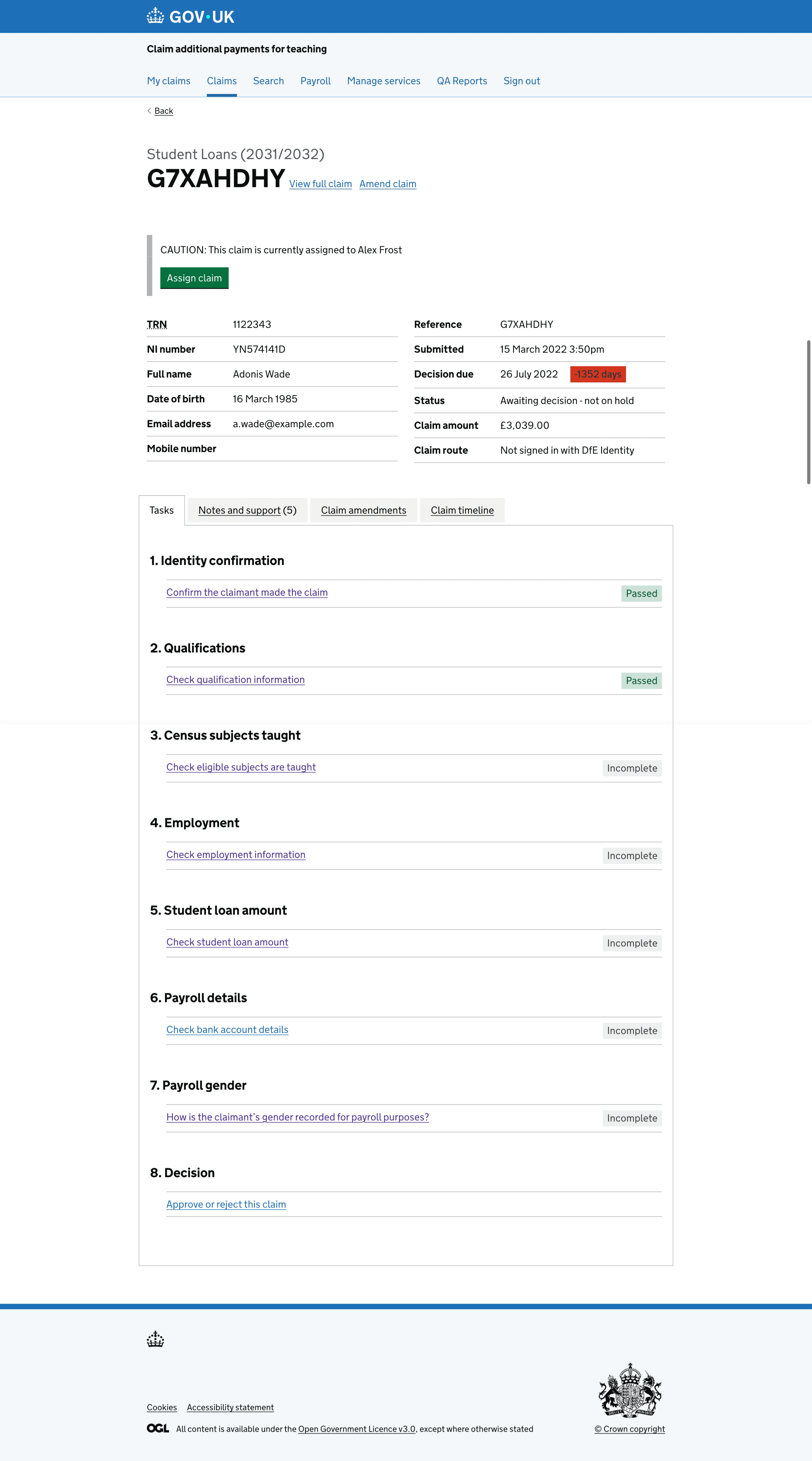
Using familiar patterns helped reduce the amount of change required for operational teams while supporting the new service requirements.
Improving how information is presented to teachers
We also looked at how information was organised throughout the front end of the service to try and reduce incorrect information being sent to caseworkers.
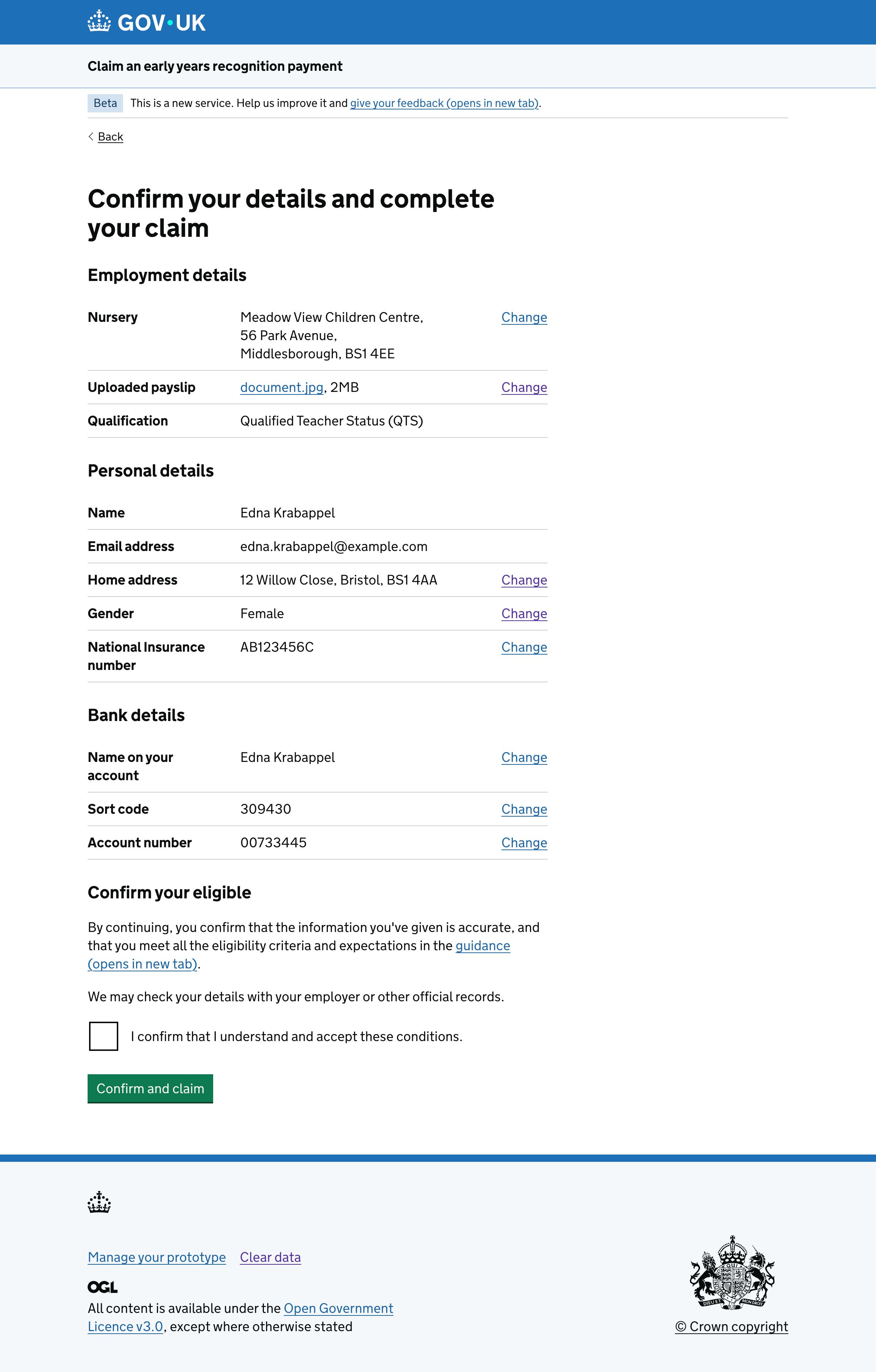
For example, we reviewed the structure of the “Check your answers” page and grouped information into clearer sections.
Separating employment information from personal details made it easier for teachers to review their application before submission and helped reduce the likelihood of errors for caseworkers.
What we learned
Working directly with operational colleagues helped us identify needs that were not always visible through claimant research alone.
Many of the improvements we made were not about adding new functionality. Instead, they focused on making information easier to access, understand, and review.
By treating caseworkers as users of the service, we were able to design solutions that support both efficient claim processing and a better overall experience.
Looking ahead
As the service moves into private beta, we’ll continue working with operational teams to understand how the service performs in a live environment.
We’ll use feedback and performance data to identify further opportunities to improve workflows, reduce manual effort, and support more efficient claim processing.