We are proposing changes to address these issues, focusing on making the service clearer, providing users with the information they need at the right point, and reducing unnecessary barriers. These are:
- making the nursery search easier to use
- making ‘formal performance measures’ easier to understand
- explaining why we ask for gender
Making the nursery search easier to use
We know from both our analytics and user research that people have been struggling with the nursery search.
The search previously required users to enter the setting name in a very specific way. Small differences in spelling, punctuation, or wording could mean that users were unable to find the setting they were looking for, without necessarily understanding why.
We have updated the hint text to make the requirement clearer:
Enter the name or address of the setting. Use the setting's official name exactly as it appears, including any punctuation, spelling and words such as "The".
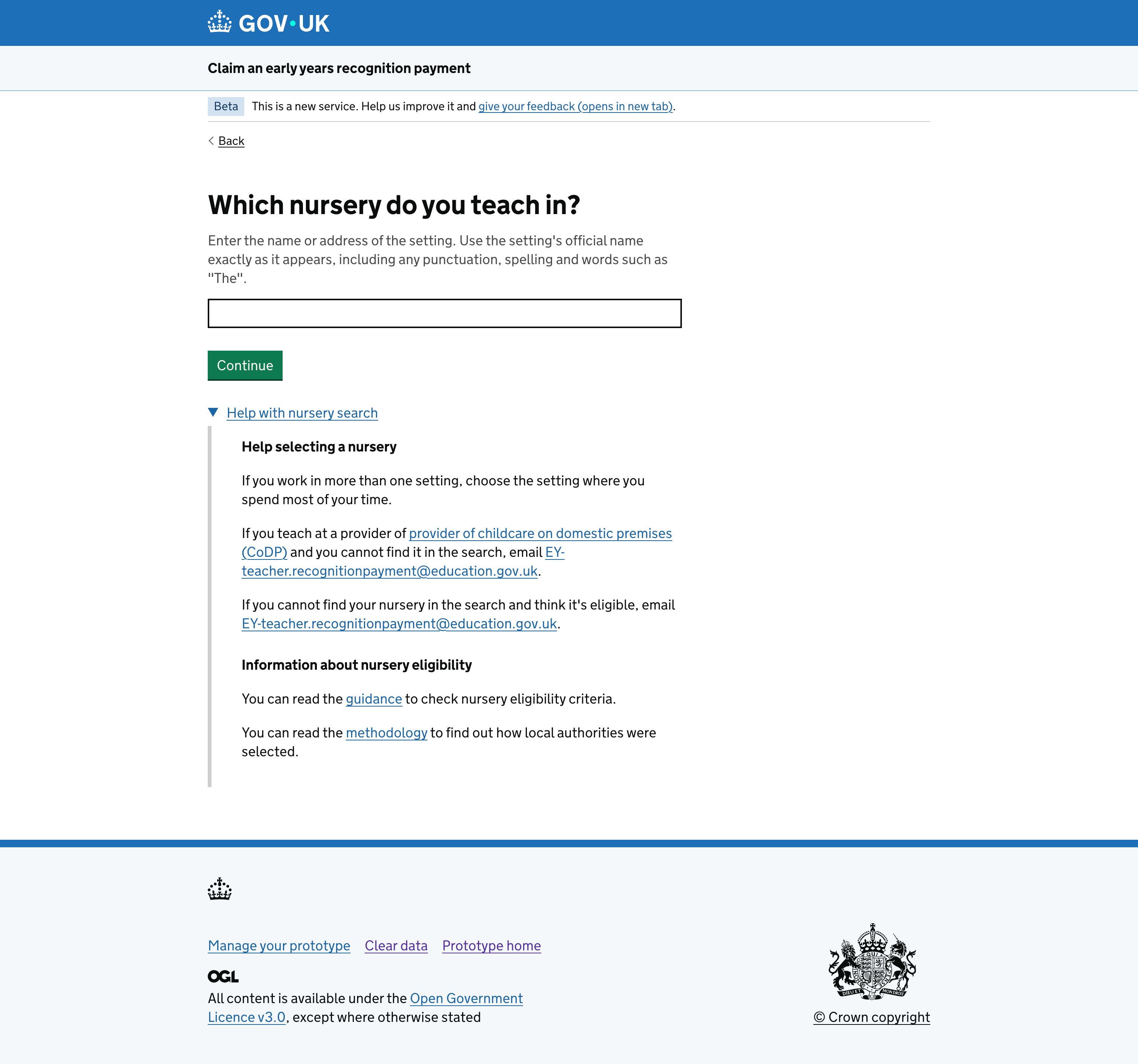
This gives users clearer guidance about what we expect them to enter and highlights some of the differences that could affect their search.
Alongside this content change, we have also made technical changes to the search functionality to make it less strict about matching. This should make the search more forgiving when users don't enter the setting name exactly as expected.
Together, these changes aim to address the issue from both sides: giving users clearer guidance while making the underlying search more tolerant of small differences in their input.
Making ‘formal performance measures’ easier to understand
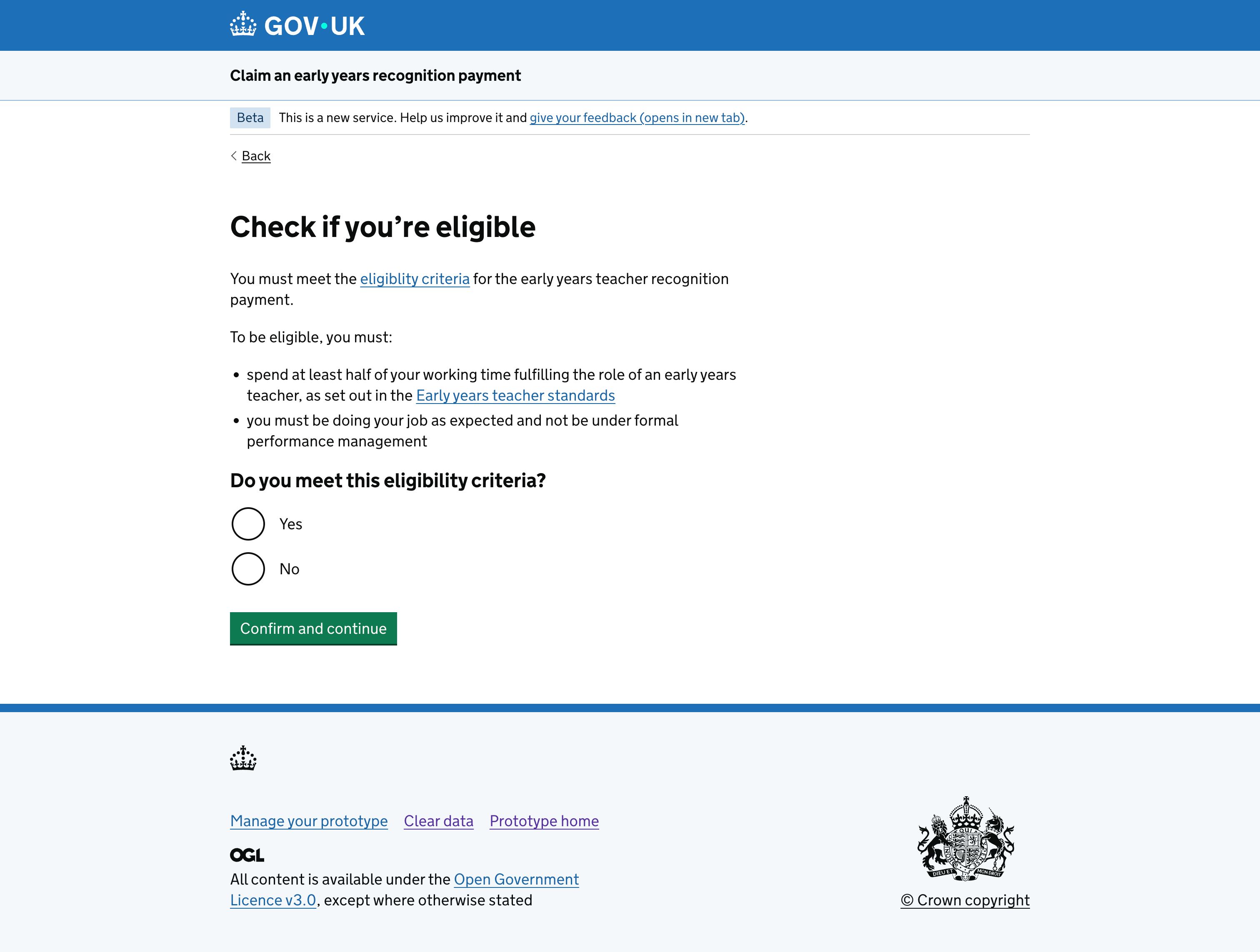
Another issue identified through our recent user research was that users found the term 'formal performance measures' difficult to understand on the Check you're eligible page.
Users weren't always clear about what the term meant or what information they were expected to consider when answering the question. This created uncertainty at an important point in the eligibility journey.
We have changed the wording from: ‘You must meet the standards of your role and not be subject to formal performance measures’.
To: ‘You must be doing your job as expected and not be under formal performance management’.
The aim is to give users enough context to understand the terminology and confidently answer the question, without requiring them to already be familiar with it.
Explaining why we ask for gender
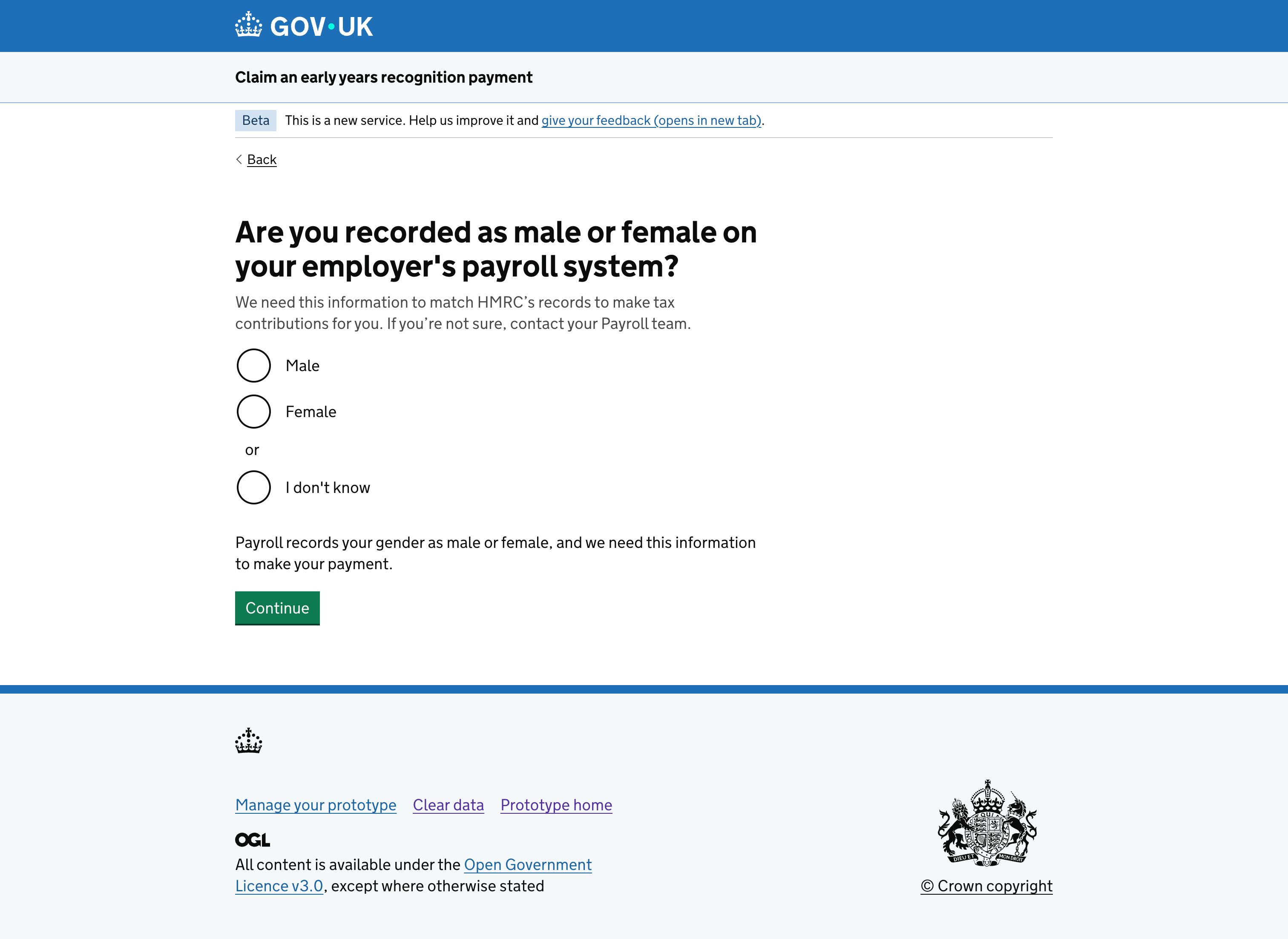
During our recent user research, some users questioned why we needed to ask their gender as part of the journey.
We had previously included an explanation of why this information was needed within a Details component. However, because the explanation was hidden by default, users could easily miss it and were left questioning why we were asking for this information.
We have therefore removed the explanation from the hidden Details component and moved it directly onto the page.
This means users can now see the reason for asking their gender without needing to take any additional action. The change makes the purpose of the question more transparent at the point where we ask for information and aims to build users' confidence in the journey.