
The Problem
This work focuses on the registration journey for the service. We identified three key problems:
- Users were automatically opted out of user research (UR) and there was no question during registration journey. Users could only opt in later, after completing a module or feedback form. This meant that we would struggle to target users that do not complete a module as it is unlikely they would have the opportunity to opt in to participate in UR.
- International users could not enter accurate details. They selected incorrect UK local authorities to create an account which led to incorrect user data.
- We know parents, carers and international users access the service, but the content did not make this clear, which may have discouraged them from creating an account and accessing training. While the training is not specifically aimed at these groups, we want anyone who could benefit from it to feel able to use it, especially where there are valid reasons such as preparing for a future role in Early Years.
Design process
Research and insights
We mapped out the full registration journey and analysed page drop-off rates using Google Analytics. This helped identify where users were leaving the journey. The highest drop off rates were on the Local Authority question (LA) page (30%) and the setting type question (16.5%).
Original setting type question page
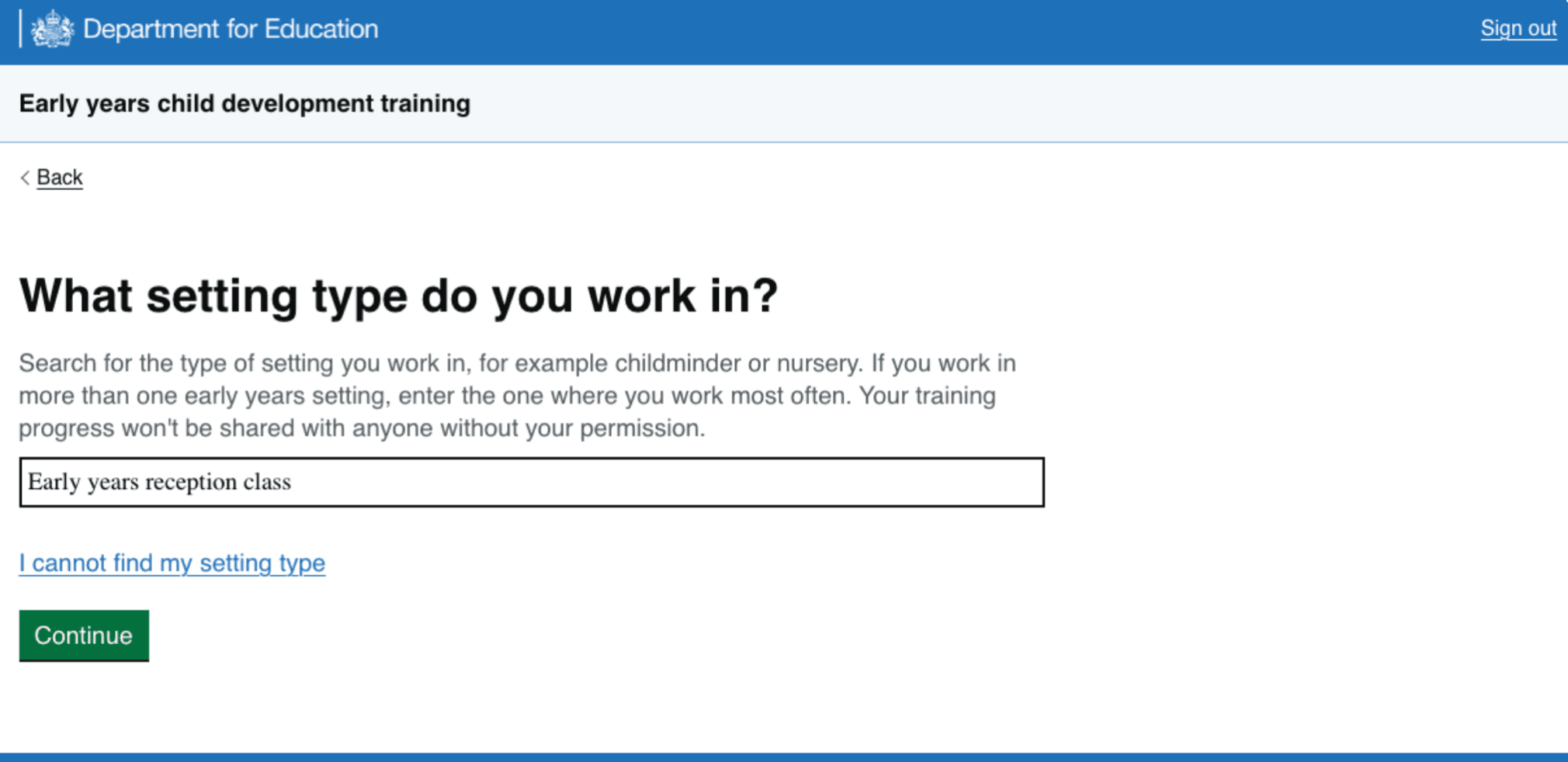 We reviewed the setting type question and 13% of users (6,990 total accounts) selected “I can’t find my setting type” and entered free text. This was an improvement from 23% in the same period in 2025 following the setting type options update.
240 users (3.4%) search and selected unemployed. Of the 240 users 54.6% used search and 45.4% entered free text.
56 users (0.8%) search and selected the parents or carer option. Of the 56 users, 80% used search and 20% entered free text.
This showed users could still progress using the accessible autocomplete. However, the content did not make sense for these users. After reviewing the data, we agreed we could improve content and routing without changing the overall structure of the registration journey.
Original Local Authority question page
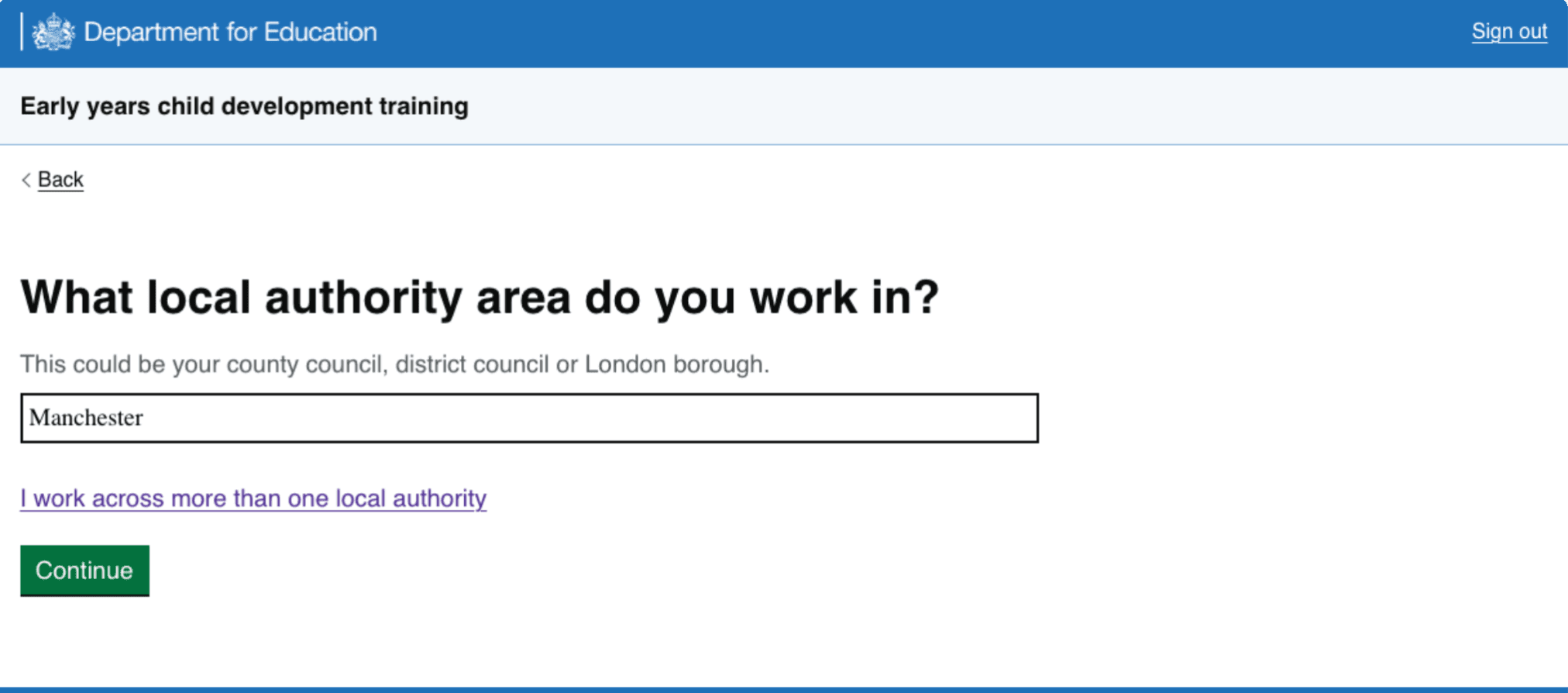 From January to March 2026 over 1,000 international users accessed the service. These users could not provide accurate information during registration which led to inaccurate data. This could explain the high drop off rate on this page as this question does not apply to them.
Design
The high-level design process involved:
- sketching multiple user flows using sticky notes
- turning the best options into high fidelity user flow
- designing the new pages
- sharing the designs with the wider team for feedback
- Iterating based on feedback
The outcome
Added a “Where do you live?” question page
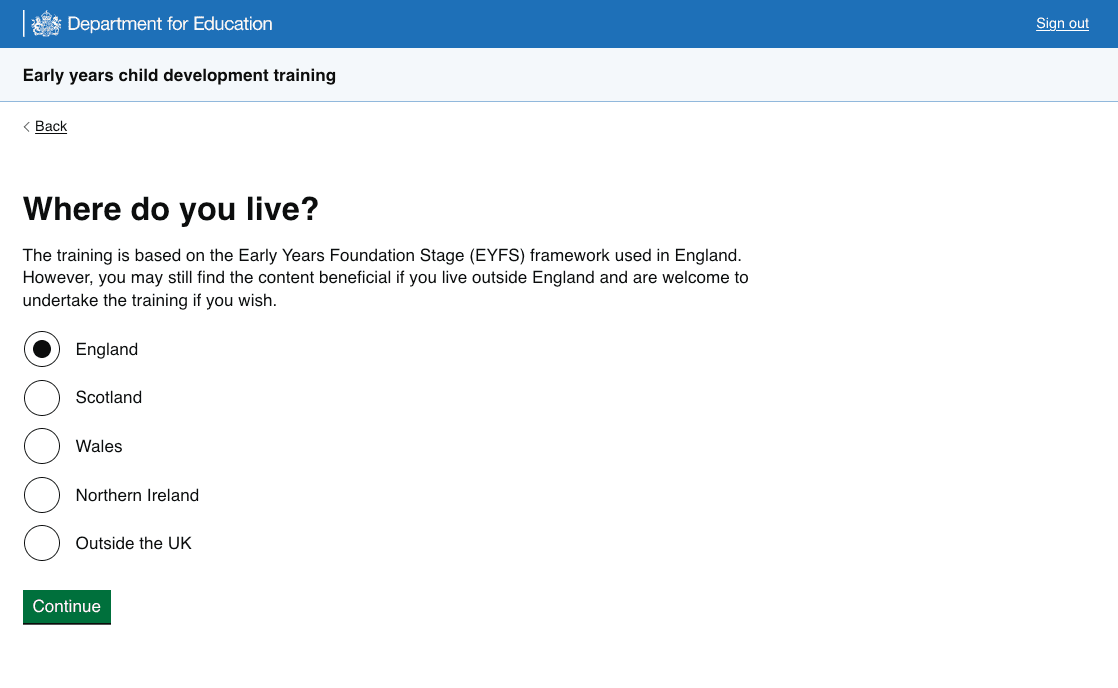 This page allowed us to route users to only view relevant pages for them. For example, if a user lives outside of England, we have added routing to skip the page that asks ‘what local authority area do you work in’ because the accessible autocomplete options only have local authorities in England.
Added a UR opt-in question page
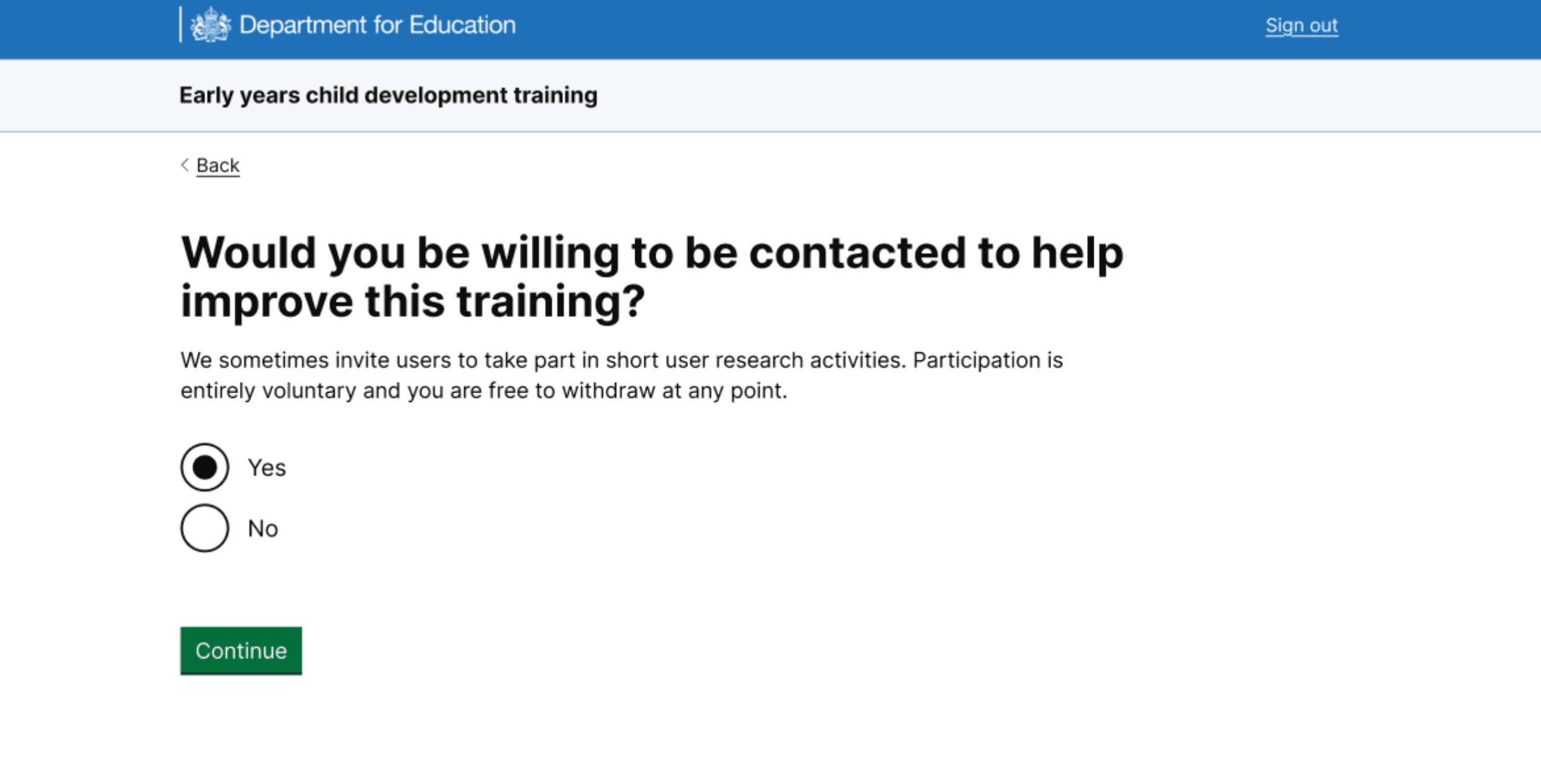 We added the user research participation question to the end of the registration journey, so users have a choice, rather than automatically being opted out of UR.
Updated the setting type question page
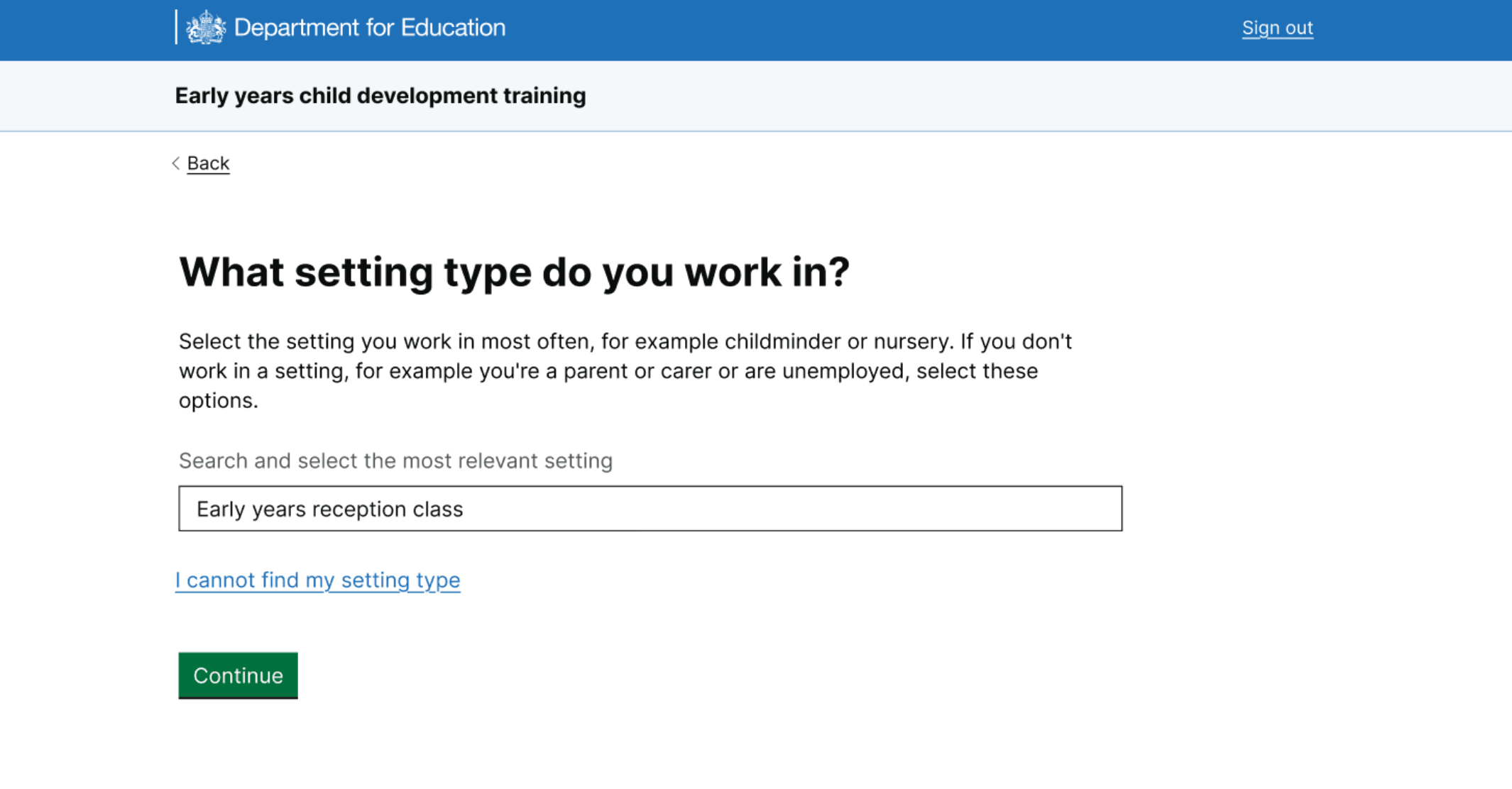 We updated the content to explain that there are options for parent, carers and unemployed users. We replaced the previous hint text with normal paragraph text. This allowed us to use hint text to explain how the accessible autocomplete component works.
Update the local authority question page
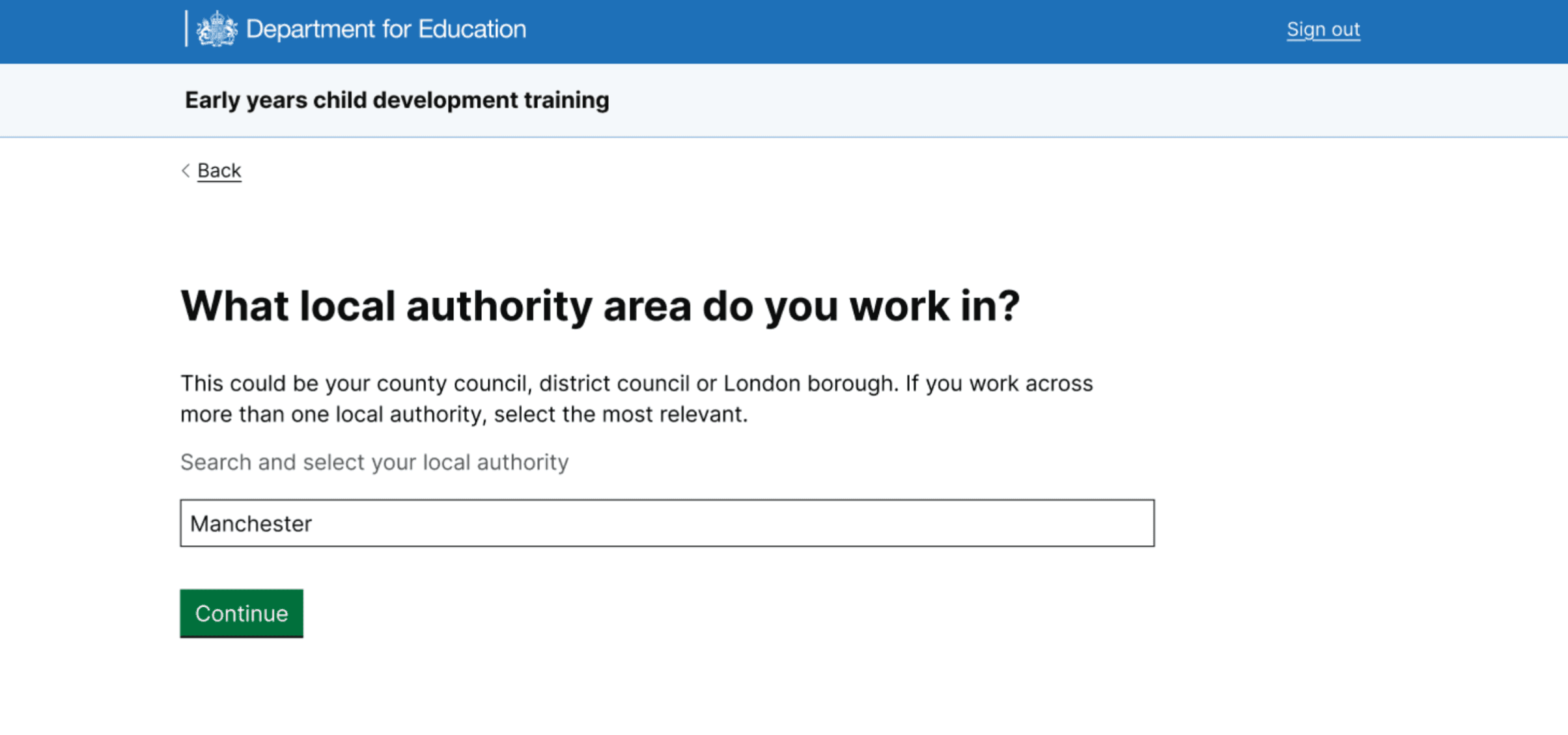 To make the design consistent with the setting type question page, we also used hint text to explain how the accessible autocomplete component works.
Hypotheses
Our hypotheses are:
- we believe that adding the user research participation question to the registration journey will allow us to build a larger pool of participants for research - this will allow us to target users more accurately and contact users that do not complete a module
- we believe that adapting the registration journey to better support parents, carers and international users will lead to more accurate data and an increase in registrations as users will be less likely to drop off or provide inaccurate information
Next steps
The developers are updating the registration journey. The risks involved with changes are low, so we have decided to make the changes into the live service without user research.
Monitoring the success
We will use Google Analytics, Microsoft Clarity and the team’s data to monitor the impact of the changes, including:
- overall registration numbers
- user drop off rates
- how many users register that live outside of the UK
- how many parents/unemployed register
- how many users opt in compared to how many users opt out to participate in user research