
Mention of ‘salaried courses’ in this post refers both to school-direct salaried courses, teacher degree apprenticeships (TDA), and post graduate teaching apprenticeships (PGTA).
Context
When researching the needs of providers who offer salaried courses, they are often looking for candidates with school experience, particularly for apprenticeships.
This is not clear to candidates, and they often apply without the required school experience. Therefore, providers are often inundated with unsuitable applications, and candidates are subsequently rejected.
A policy change is being made for the next cycle to allow providers to state their school experience requirements on salaried courses.
User need
Providers need to be able to communicate their school experience requirements to candidates and need candidates to be clear on whether they met the requirements before applying for a course.
What we did
We enabled providers to communicate their school experience requirements by:
- adding an optional school experience section to courses
- allowing them to add detail about their requirements
- providing them with guidance on what candidates are looking for
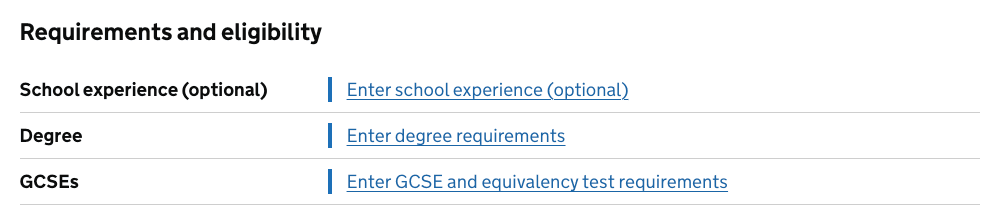
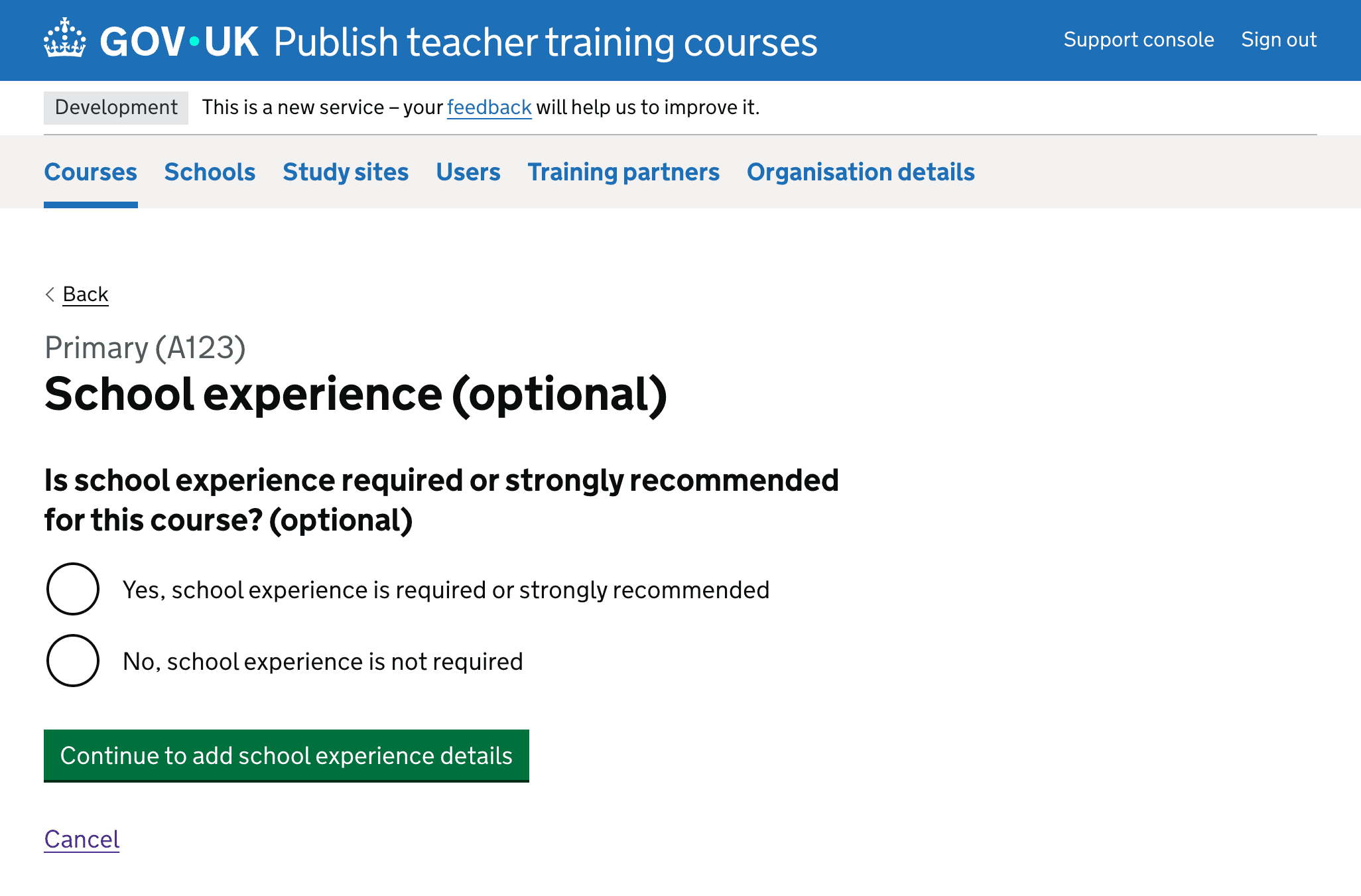
In the original design tested, the button said ‘Continue’. However, participants lacked confidence they would be able to add the necessary detail and didn’t realise they would be able to on the next page.
So, we iterated the content on the button to say ‘Continue to add school experience details’, and this tested well.
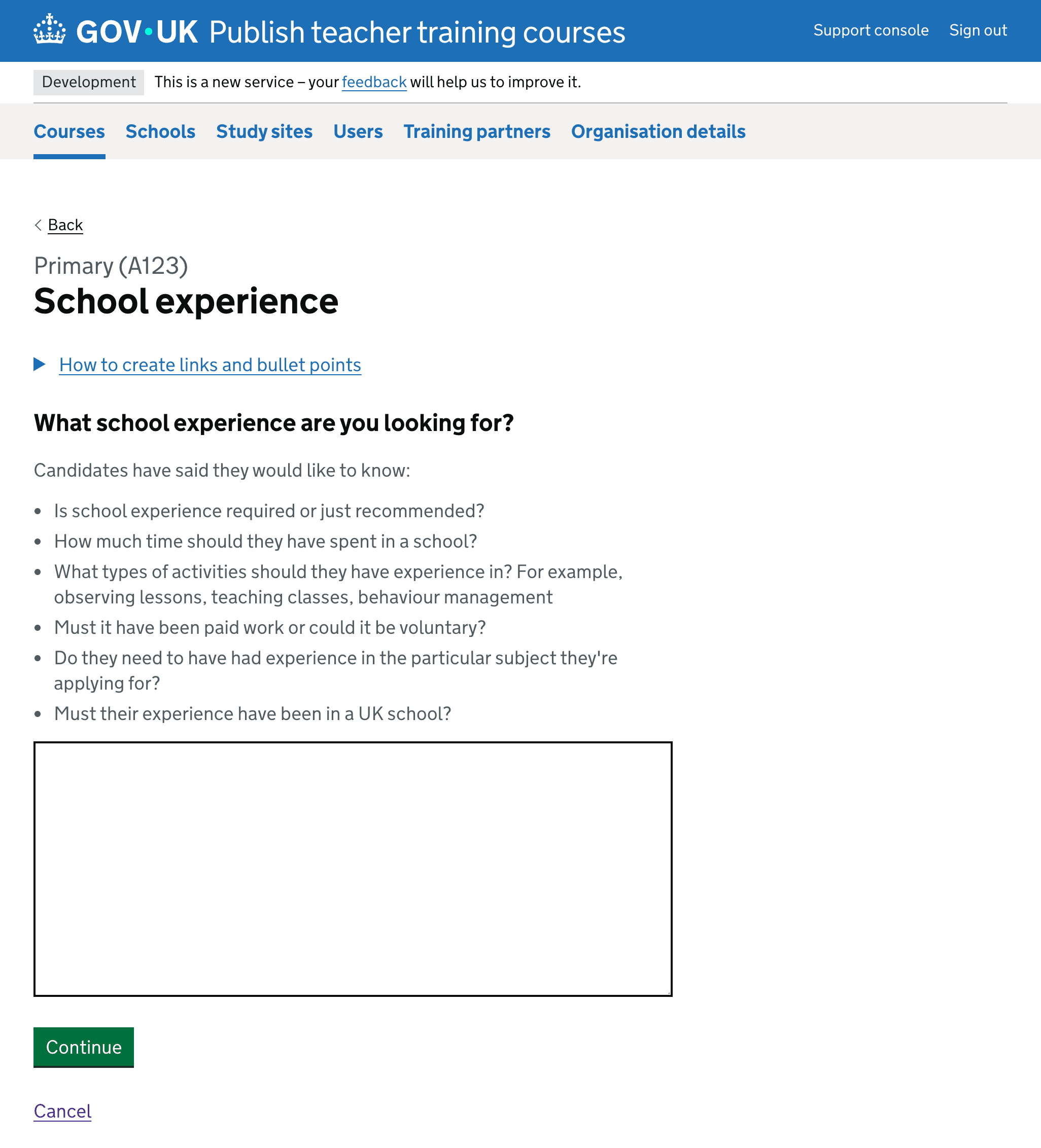
We would use this information to display school experience requirements on salaried courses on Find.
User testing
We tested the designs with providers who offer salaried courses in May 2026, and they responded positively. The solutions would align well with providers real-world workflows and would support their day-to-day tasks.
Participants valued being able to set school experience expectations.
They were able to answer the question of whether school experience was required and valued having the ability to write detail on the type of school experience required.
The guidance prompts were helpful for ensuring the information communicated is what candidates would like to know.
Several participants would have preferred to have a third option that school experience was ‘recommended’, however, we know from testing with candidates that they were confused when school experience was recommended.
Next steps
We will be building these changes into the service and aim have them live for the rollover period this year.
We will monitor whether further improvements are needed, such as revisiting the addition of a third option to state that school experience is recommended but not required.