
Mention of ‘salaried courses’ in this post refers both to school-direct salaried courses, teacher degree apprenticeships (TDA), and post graduate teaching apprenticeships (PGTA).
Context
It’s not clear to candidates that school experience is required, and they often apply without the right experience. Therefore, providers are often inundated with unsuitable applications, and candidates are subsequently rejected.
We added school experience to salaried courses on Publish so providers could communicate when school experience is required on Find.
User need
Candidates need to be able to understand the school experience requirements on salaried courses they are interested in, so they are clear on whether they meet the requirements before applying for a course.
What we did
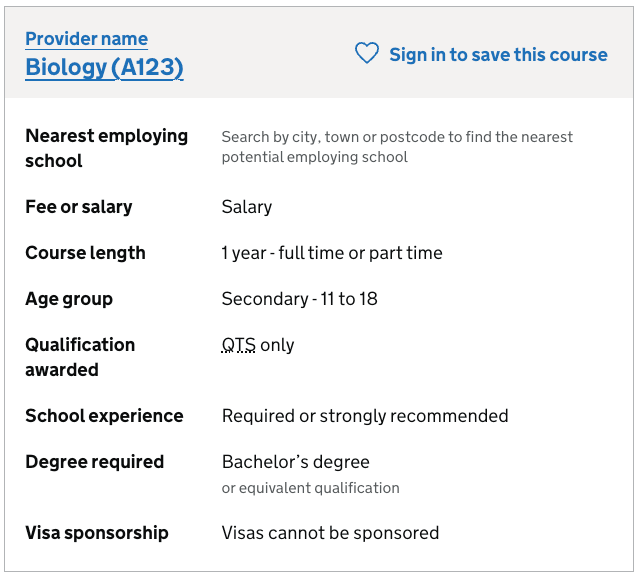
When providers select school experience is required on salaried courses, we display this on the search results page on Find:
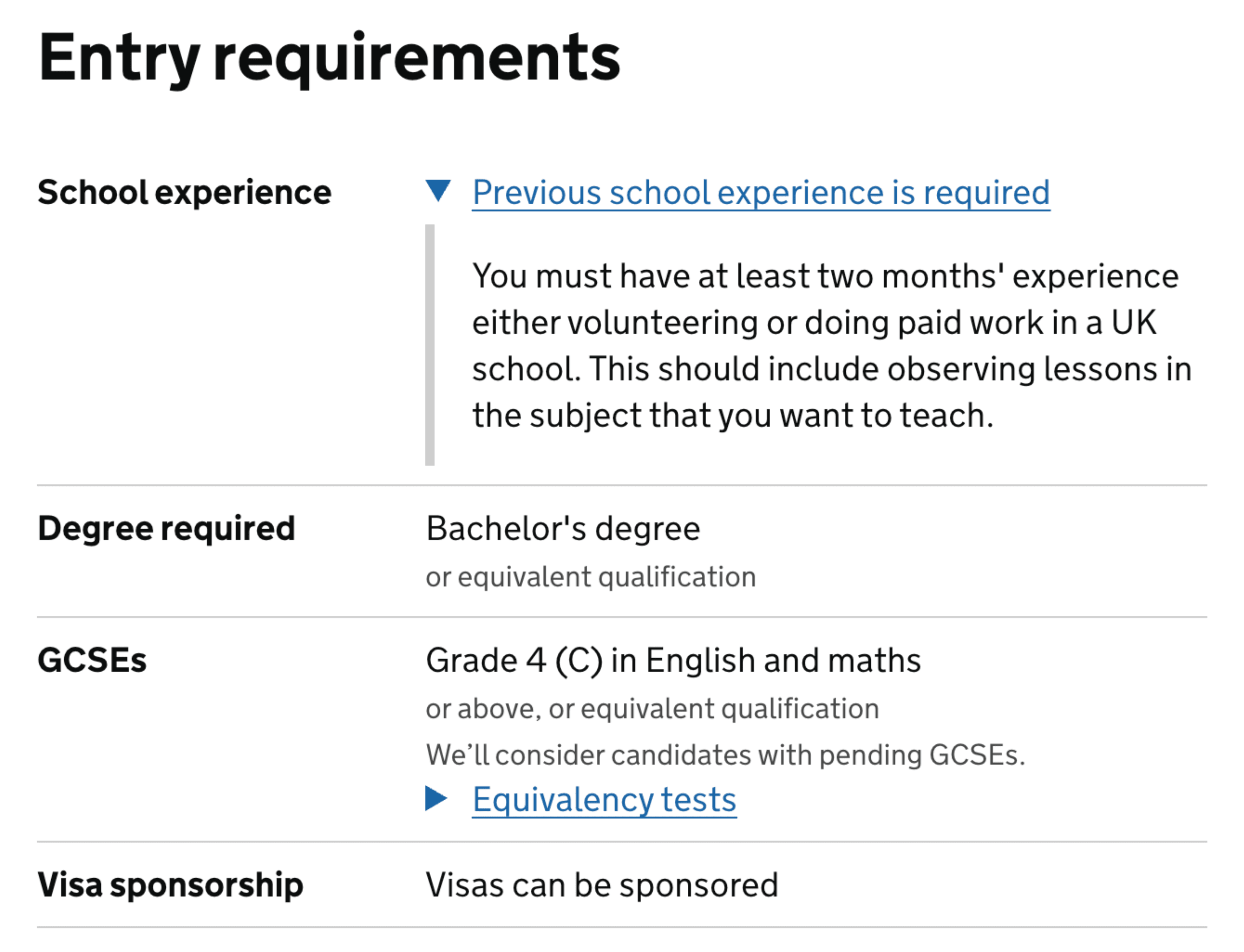
We also display this on the course page, along with the additional detail on the requirements providers added to Publish:
When candidates apply for a salaried course that requires school experience, we added a new interruption page where the detail on the requirements is repeated:
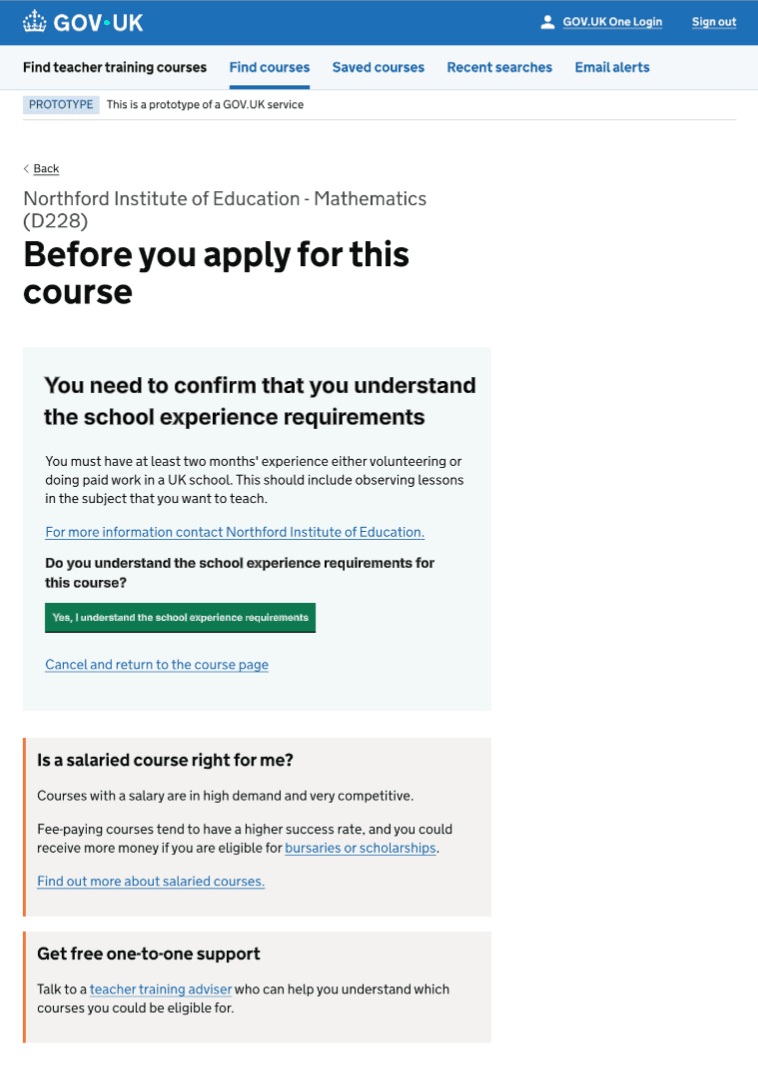
We included signposting to Get Into Teaching for those who are not sure if the course is right for them. The guidance takes them to find out more about financial support, salaried courses, and teacher training advisers.
When candidates select ‘Yes, I understand the school experience requirements’, they are taken to the existing page which explains they will be navigated to Apply for teacher training.
User testing
We tested the designs with candidates in April 2026, and they responded positively. The solutions would align well with providers real-world workflows and would support their day-to-day tasks.
The requirements were seen by participants, those with the relevant experience would confidently proceed and those who didn’t have the relevant experience would not apply.
It was important to participants that the information from providers on school experience requirements included details such as the duration and the type of activities such as teaching, observing lessons and whether experience needs to be in their chosen subject.
Required
The “required” label was clearly understood, helping reduce unsuitable applications. However, some participants interpret this as needing to already be confident in a teaching role, which raises the perceived bar for entry.
Recommended
The “recommended” label was confusing, they didn’t understand how it differed from ‘required’ and interpreted it to mean experience is mandatory. Some felt they would be at a disadvantage or wasting an application if they were to apply without experience.
Not required
The “not required” label was understood as meaning experience is optional, which made candidates feel more confident applying. However, some candidates questioned the credibility of courses without expectations of school experience.
Next steps
We will be building these changes into the service and aim have them live for the rollover period this year.
We will monitor whether further improvements are needed to help candidates understand the school experience requirements on salaried courses before applying.