
The problem we’re solving
DfE has a wealth of user research, but finding the right insight at the right time can be difficult. Research is stored and organised in different ways across the organisation, making it hard for colleagues to know what evidence already exists.
This can slow down discovery and planning, and can leave people unsure if they've found all the relevant research.
Two factors can make this challenge greater:
- knowledge loss - DfE works with many contractors, and knowledge can leave the organisation when they leave
- inconsistent informal methods - colleagues often rely on ad hoc approaches such as asking in Microsoft Teams, which can produce mixed results
FUI was created to help address these challenges. The service uses AI to help colleagues discover relevant insights, explore the research behind them and reuse existing evidence.
During alpha and private beta, we tested and refined the service through user research, usability testing and accessibility testing.
This series shares what we learned and how those findings shaped the design of the service.
How the service works
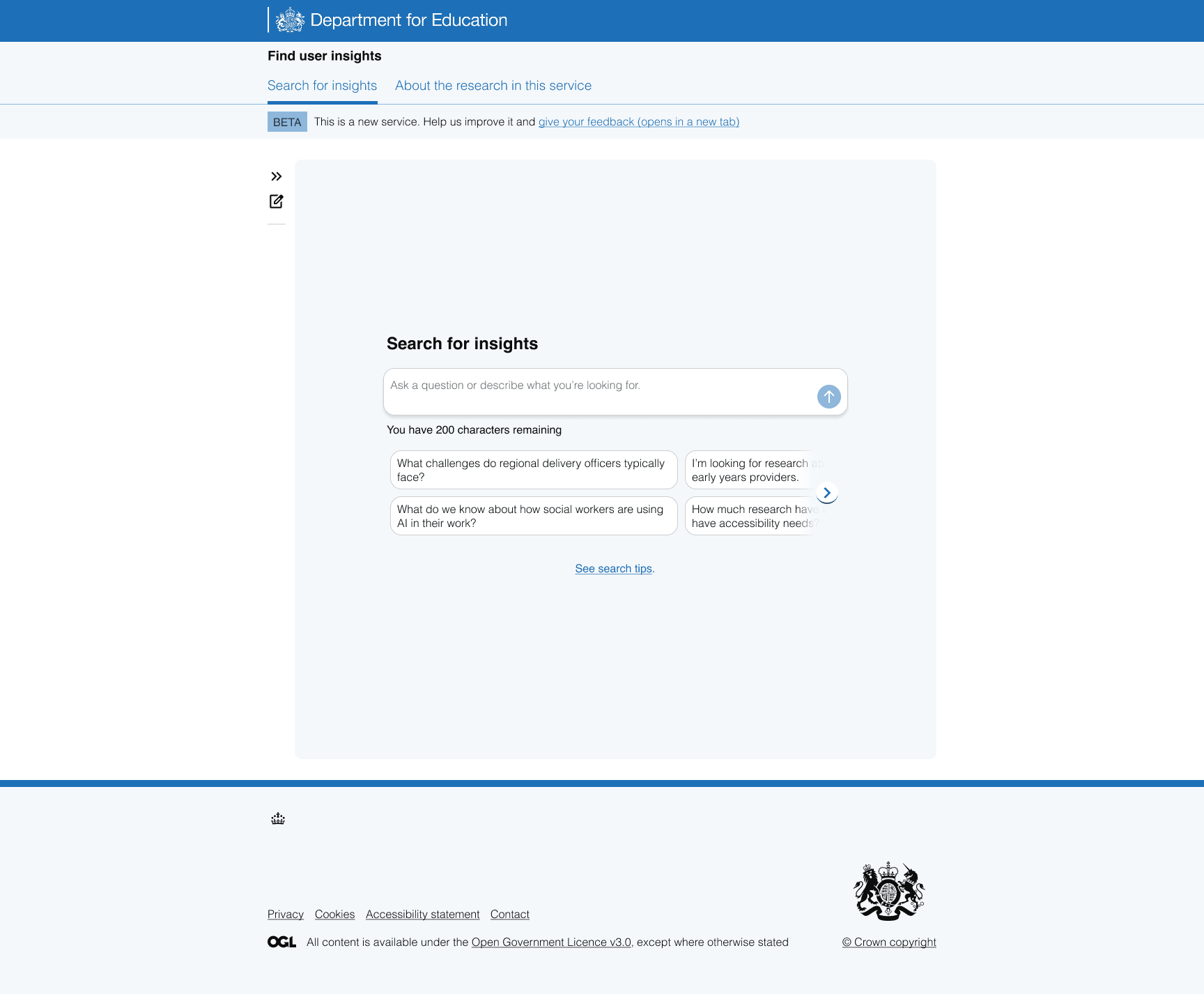
Users ask questions in their own words through a chat-style interface.
For example, a user might ask: 'What do we know about the different kinds of early years providers?'
The service uses AI to search the research and show users a response that includes:
- a summary of the most relevant insights from the research
- links to the sources used to create the summary
From the response, users can:
- open the source documents
- ask follow-up questions
- ask a new question
- start a new conversation
All research in the service was carried out within DfE and the portfolio teams review it against the FUI research standards before including it.
The FUI chat-style interface:
The benefits we expect FUI to provide
By making research easier to find and reuse, we expect FUI to:
- reduce duplicated research
- speed up onboarding to new areas
- support more consistent, evidence-based decisions
- improve visibility of insights across DfE
- increase reuse of existing research
Who it’s for
FUI is for everyone at DfE who needs to find or use user research.
In alpha and private beta, we focused primarily on user researchers and other user-centred design roles. We also included some product roles.
We grouped users into two broad groups:
- people who find insights ('finders')
- people who help assure their quality and use ('assurers')
Finders
Finders look for and use research insights.
They use insights to shape decisions. This includes planning research, deciding what to explore next and supporting delivery teams.
This group includes:
- user researchers
- heads of user research
- product managers
- programme leads
- heads of product
Assurers
Assurers focus on how research is managed and shared.
They support quality, consistency and good practice. They also help ensure the service works effectively across DfE.
This group includes:
- insight champions
- subject matter experts
- heads of user research and user-centred design
- research operations
- service owners
- delivery teams
- sponsors
Where we focused
In alpha and private beta, we focused on:
- finders, especially people exploring knowledge
- some insight strategists
- developing an early understanding of assurers with limited direct research
This learning shaped the design decisions explored in the rest of this series, including how we improved the homepage, guidance, search experience and AI response page.
What’s next
The following posts explore how we developed the service, the challenges we encountered and what we learned from testing with users.
They cover:
- how the homepage evolved
- how we redesigned guidance to support users
- how the search and chat model developed
- how the AI response page changed over time
- what we're planning to do next