
Context
We received concerns from providers that their courses are ranked lower in search results than they expected.
One of the reasons is because many providers offer variations of the same course, which we display as individual search results in Find.
For example, below shows the provider ‘Leafy Green School’ appearing three times when searching for mathematics courses.
However, this is the same mathematics course, there are just options for full time or part time, and different qualifications.
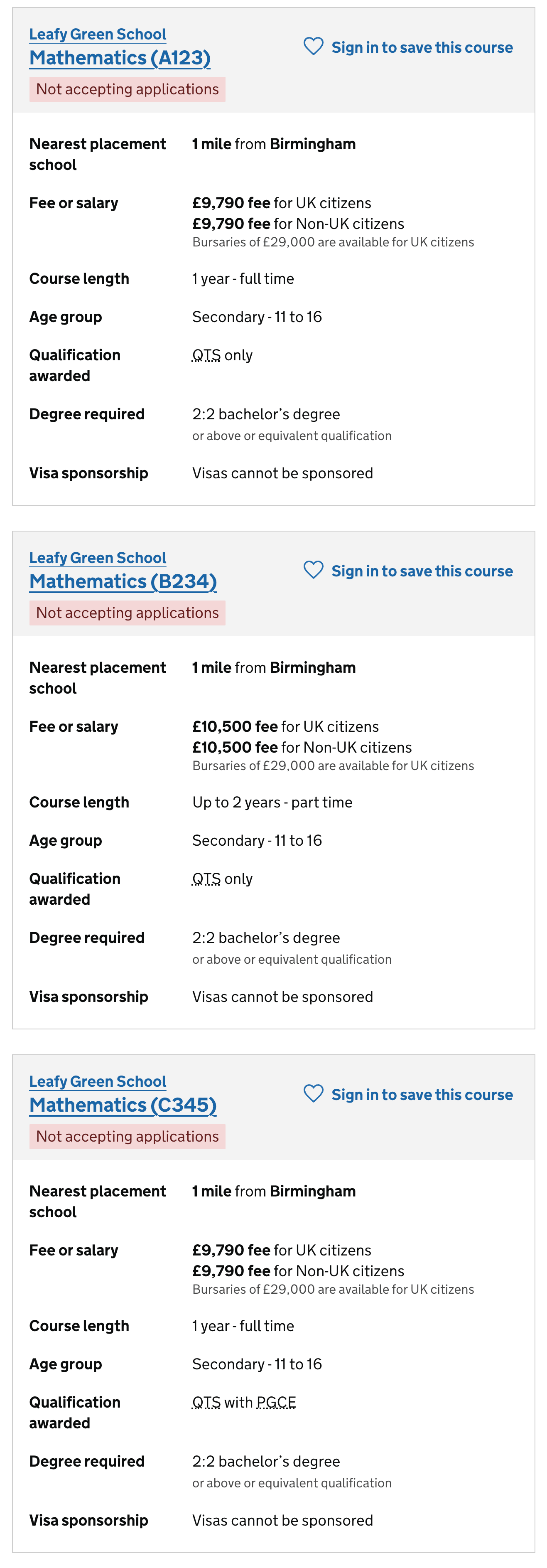
We call this ‘provider duplication’. This is common – around 87% of initial searches show the same provider more than once. Even after candidates apply filters, duplication remains high – around 78% of searches contain at least one instance of provider duplication.
Of results that include provider duplication, the most common reasons are:
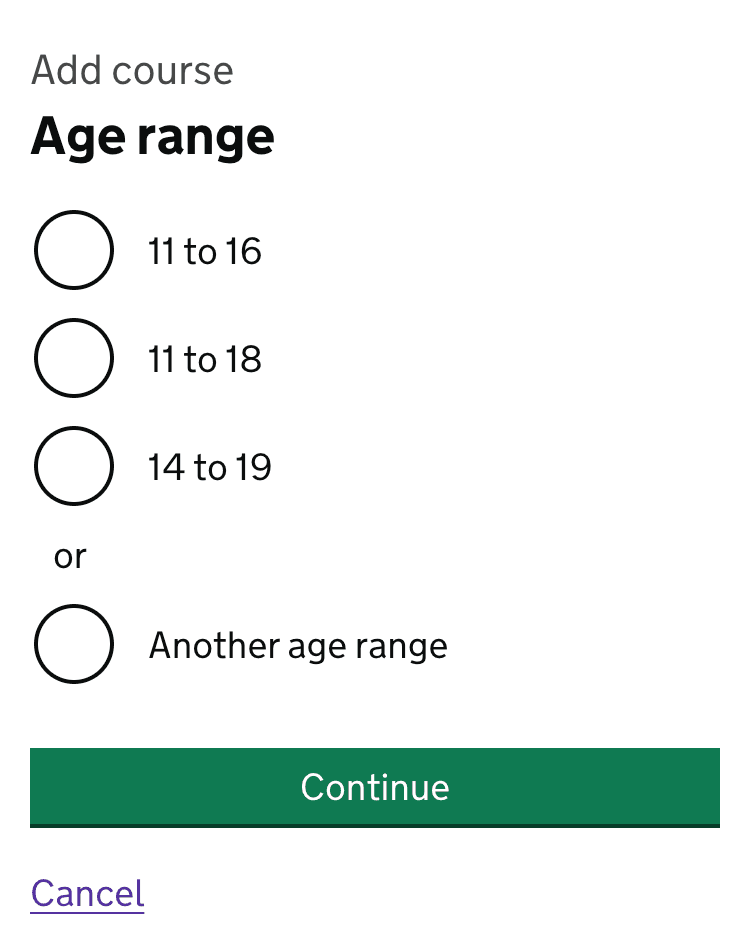
Age range – 59%
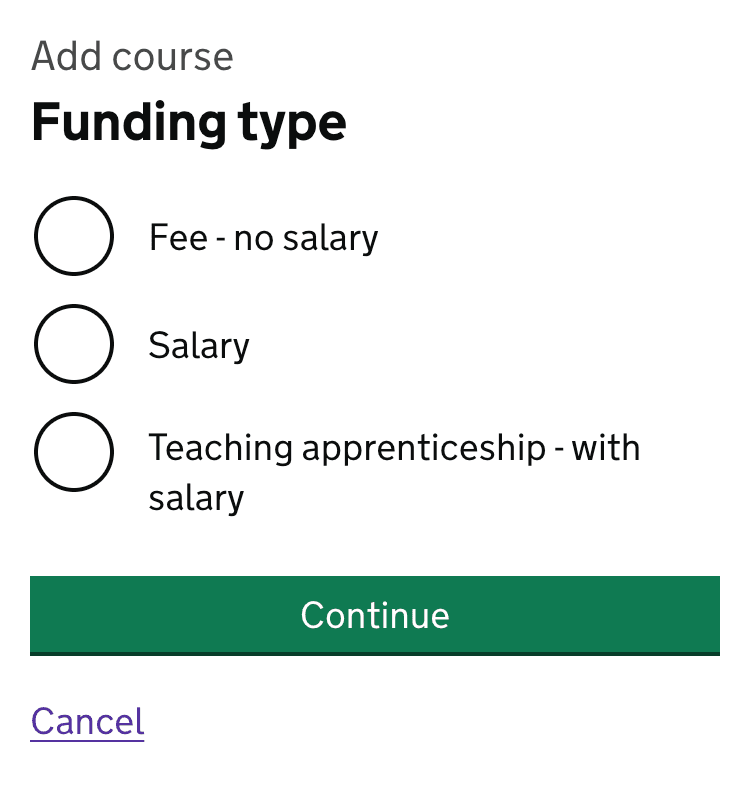
Fee or salary - 39%
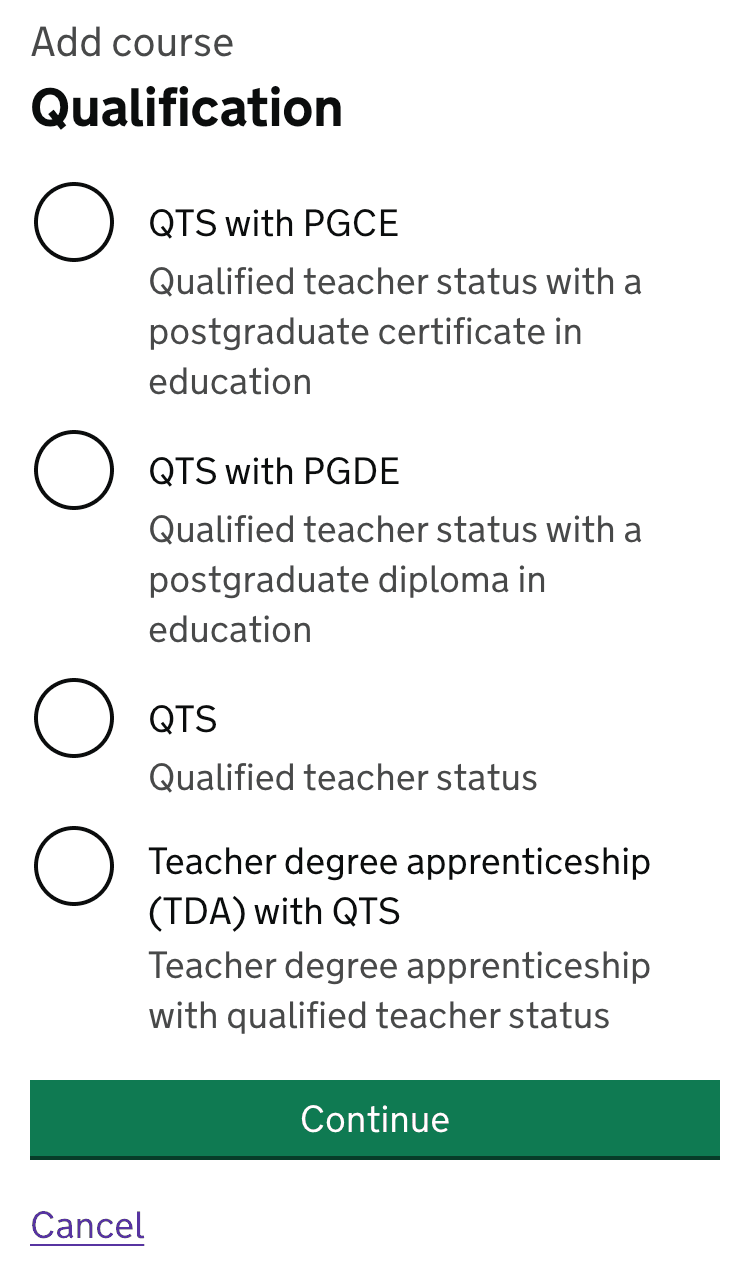
Qualification - 37%
Full time or part time - 32%
Provider duplication also appears where there are multiple start dates, multiple accredited providers, and courses with a SEND specialism.
The main reason provider duplication occurs is because of how our service works. Providers are asked to add courses which are published on Find, and for each course, you cannot select multiple age ranges, funding types or qualifications.
| Age range | Funding type | Qualification |
|---|---|---|
 |
 |
 |
We also found when researching with providers that some create multiple variants of similar courses to increase their visibility in search results, exacerbating the problem.
Analysis
We conducted analysis to find out if being lower on the search results ranking is a disadvantage or not.
We found that ranking in the search results is important. We also found that if we were to group courses together, rather than listing duplicate courses separately, course views and clicks to apply should increase for providers who are lower ranking on search results.
On page 1 of search results, a course that is the 10th in the list on the page gets a fifth of the course views it would get if it was the first course in the list. However, it does not matter if those ranked above are courses by different providers, or variations of the same course by the same provider.
Pain points
When searching for the right course for them, candidates may:
- find it confusing to see the same provider multiple times
- miss courses that are more suitable to them
When publishing teacher training courses, providers may:
- not understand why their courses appear lower in results than expected
- publish more variations or change placement schools to try and increase visibility
User need
As a candidate, I need to clearly understand what teacher training providers are available in my search location for my chosen subject.
As a provider, I need to know we are fairly represented alongside other teacher training providers, and that candidates can see the relevant courses we provide.
What we did
We had to tackle design challenges such as:
how might we reduce the emphasise of provider duplication, without disadvantaging those providers
how might we maintain consistency between providers with single course results, and providers with multiple variations of the same course
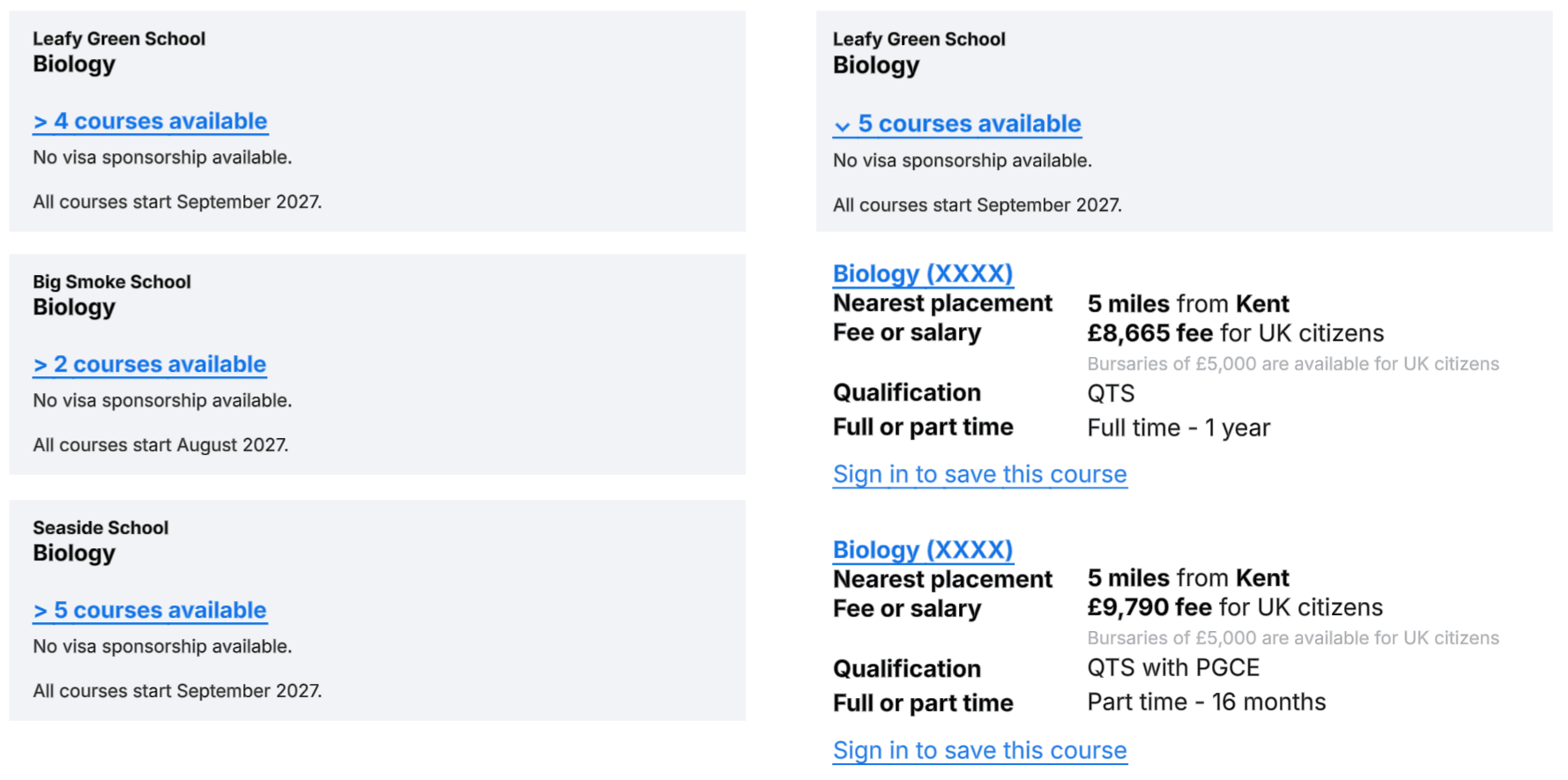
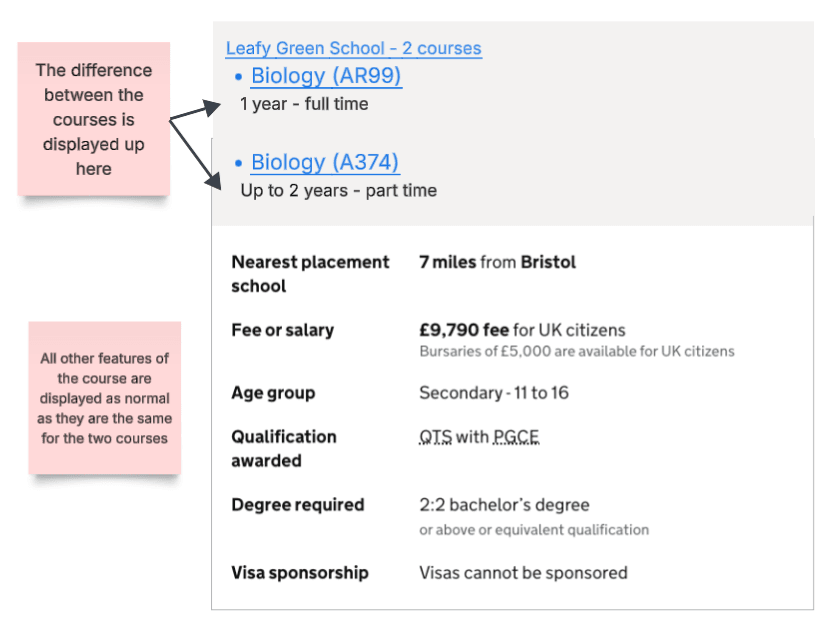
We first explored designs where variations were collapsed, or brought to the top of the result:
We then decided to take a mobile first approach and continued to explore reducing the amount of information on search results, including removing the labels such as ‘Fee or salary'.
We had a concern that removing the labels would make it more confusing for candidates, but we wanted to find this out in user testing.
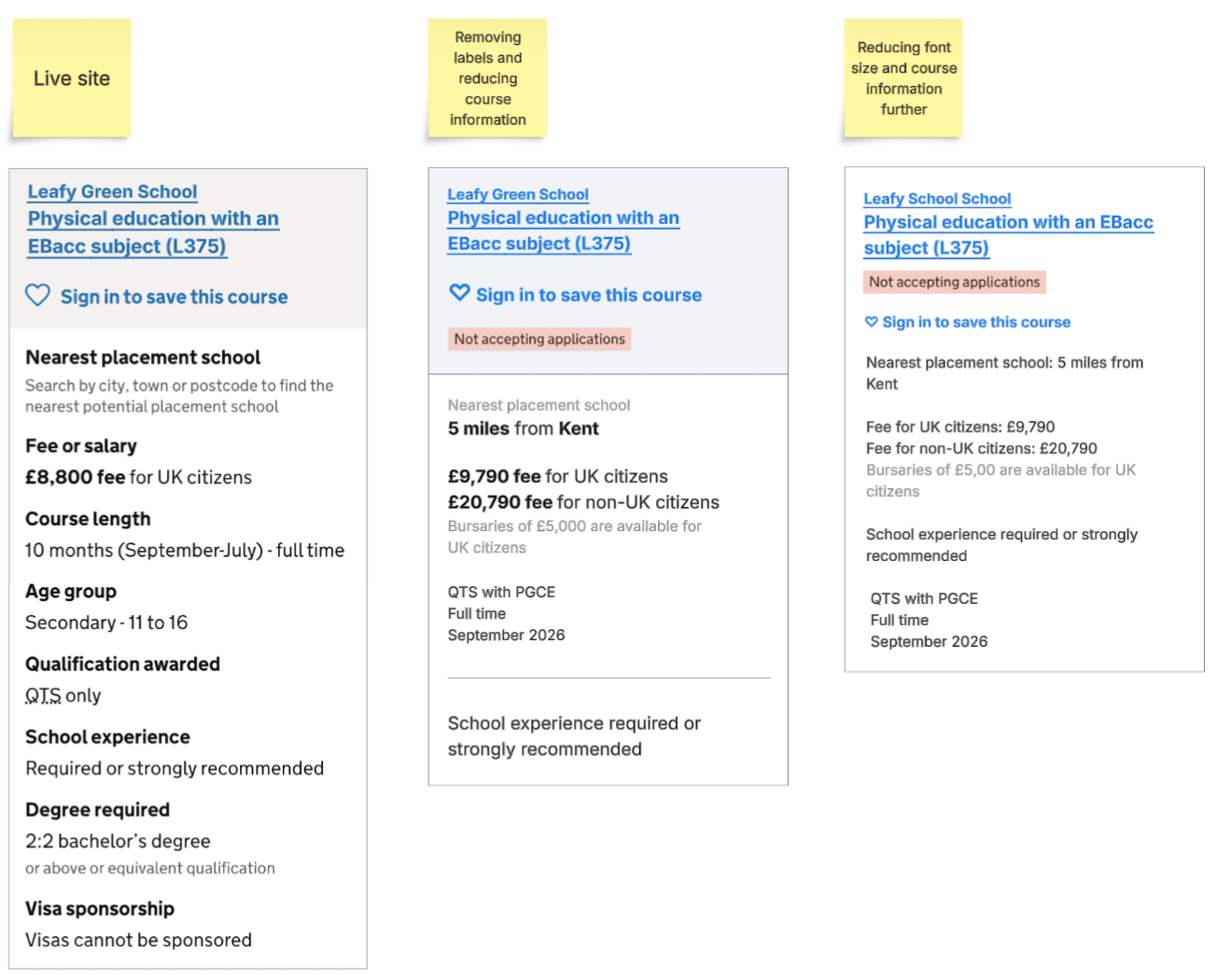
We decided to remove the following course information from search results:
- course length
- degree required
- visa sponsorship
- start date
This is because course length is less important to candidates, and we now have filters for degree required, visa sponsorship, and start date to help candidates narrow down their results.
In the design tested with, we removed the labels, displayed the minimum course information, and removed duplication of the provider's name on grouped courses:
| Single result | Grouped result |
|---|---|
 |
 |
User testing
Most participants preferred the simplified search results and grouped designs over the live site. They said the results contained enough information to determine which courses are worth exploring further.
Participants could:
- identify key information, and felt less overwhelmed
- see what providers were available, without the repetition
- compare the differences within a group of courses, with less mental effort
Some participants wanted additional information to be included, such as the location, fee amount, degree grade, visa sponsorship information, and course length.
We iterated on the prototype during user tested, including adding:
- nearest placement school at a course level
- fee amounts to fee-paying courses
- school experience requirements
- space between the course information
Final design
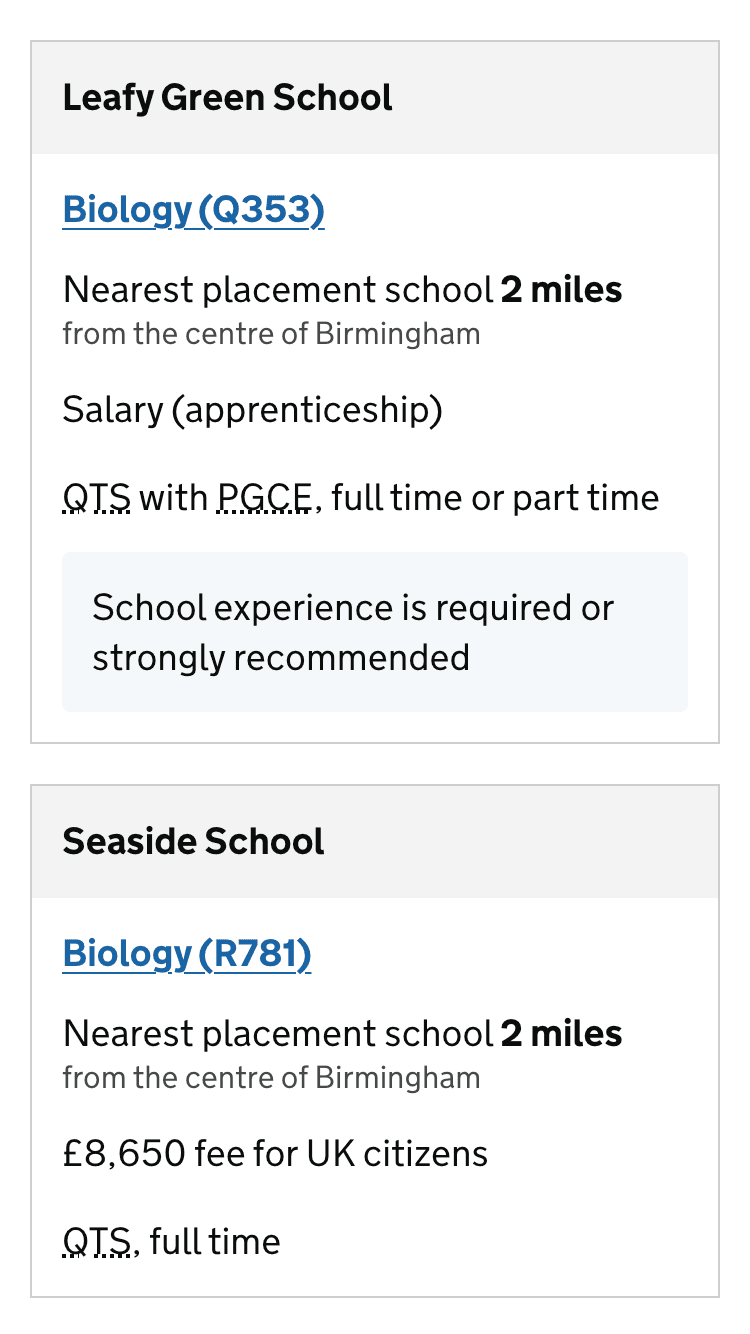
| Single results | Grouped result |
|---|---|
 |
 |
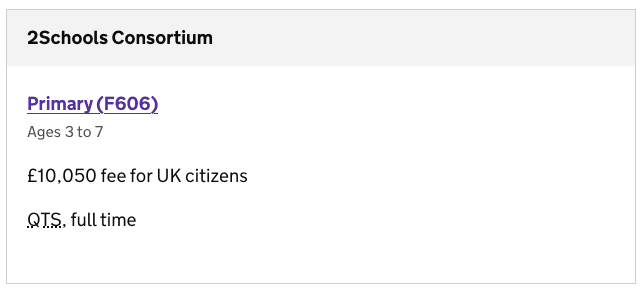
We also show age range on all primary courses, and on secondary courses when they are grouped and when age range is a differentiating factor.
Next steps
We will be building these changes into the service and monitoring their impact.
Exploring other ways to sort courses
We will explore whether there are alternative ways to sort courses in the search results.
Non-location searches are currently sorted by:
- course name (A-Z)
- provider name (A-Z)
- course code (used as a tie breaker)
Current location searches are currently sorted by:
- distance
- provider name (A-Z)
This can mean providers with names that start with letters earlier in the alphabet have an advantage in where they are ranked in search results.
Only allowing one course for each subject
Currently providers have to duplicate courses to communicate the variations available, such as age range, fee or salary, qualification, full time or part time.
We will explore whether it would be an improvement to only allow a provider to have one course for each subject, and list all the variations that are available within it (such as age range, fee or salary, qualification, full time or part time).
However, this would require policy input, and changes to Publish, Apply, Manage, and the API, so it is not something we will be changing in the 2026 to 2027 recruitment cycle.