
During alpha research, we found that users were generally willing to provide the information we needed. However, when users did not understand why we were asking for something, they became less confident and more likely to question the service.
This led us to explore how we could build trust through clearer content and better explanations.
Understanding user concerns
When completing government services, users expect to provide information that is necessary to complete their transaction.
Research showed that users became more hesitant when they were unable to understand the purpose of a question or how information would be used.
We observed this in two areas of the service:
- uploading employment evidence
- providing gender information needed for payroll purposes
In both cases, users wanted reassurance that the information being requested was necessary and appropriate.
Explaining why we need information
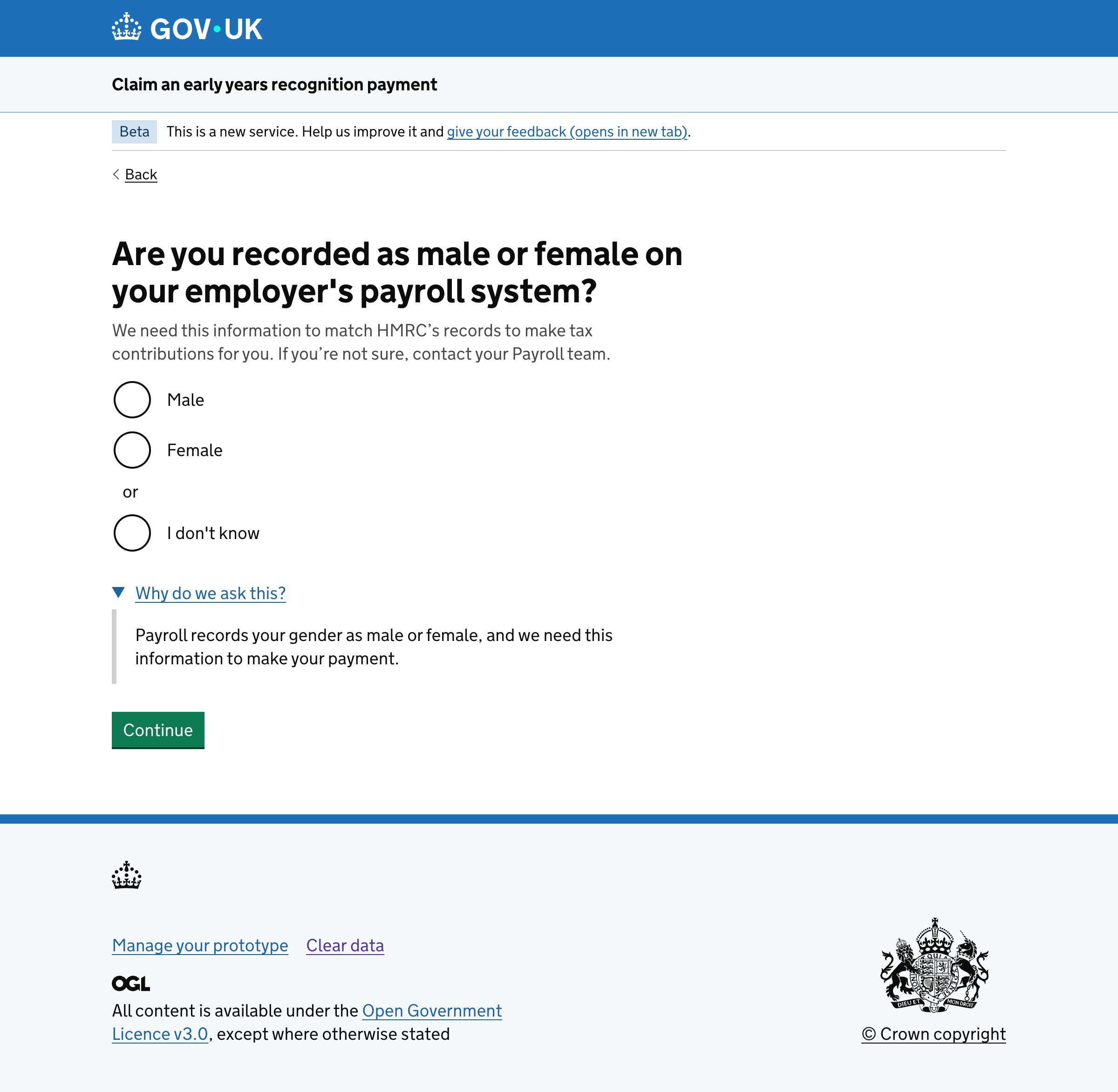
One of the questions in the service asks users for gender information required for payroll processing.
During research, some participants questioned why this information was needed and whether it was relevant to their claim.
When users are unsure why a question is being asked, it can create doubts about the service and reduce confidence in completing the journey.
To better understand the problem, we sought feedback from colleagues across government, specifically HMRC, and worked with specialists to review how the question was presented.
We revised the wording and supporting content to provide clearer context about how the information would be used as part of the payment process.
We also positioned the gender question after the bank information page in the journey to try and emphasise it is only relevant to process the payment.
Building confidence when uploading evidence
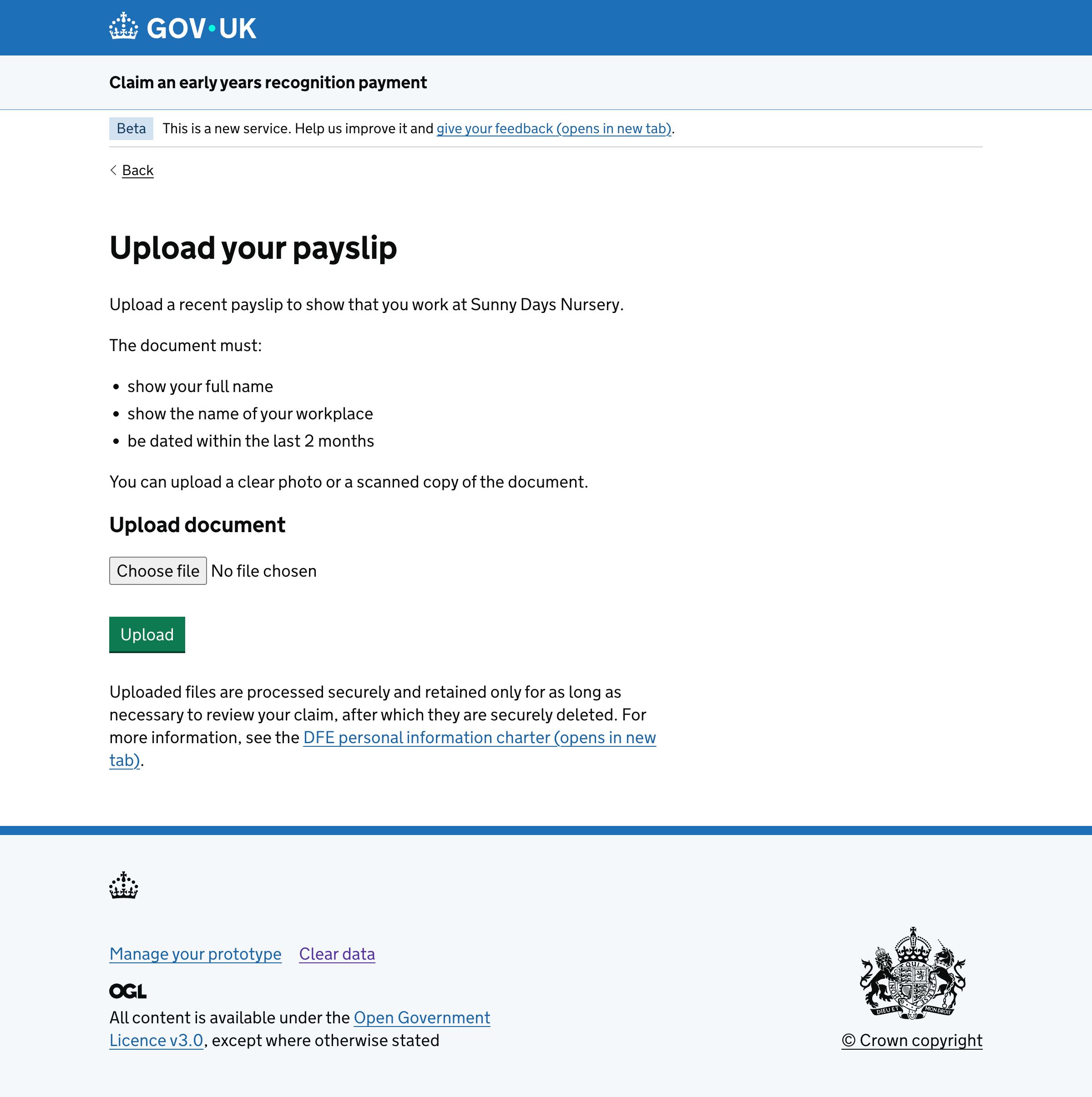
We also observed hesitation when users were asked to upload employment evidence.
Some participants wanted reassurance that their documents would be handled securely and used only for assessing their claim.
Rather than expecting users to infer this, we added clear reassurance at the point where evidence is uploaded.
Providing information at the moment it is needed helped users feel more confident about continuing.
What we learned
Throughout testing, users responded positively when we explained why information was being requested rather than simply asking for it.
The changes we made were relatively small, but they helped reduce uncertainty and improve confidence at key points in the journey.
We also found that trust is closely linked to understanding. Users were more comfortable sharing personal information when they could clearly see how it related to their claim.
Looking ahead
As we move into private beta, we’ll continue to monitor how users respond to questions involving personal information and evidence uploads.
We’ll also continue testing content and guidance to make sure users understand what information is needed, why it’s required and how it supports the payment process.
Building trust is an ongoing part of service design, and we’ll continue to iterate based on feedback from users and operational colleagues.