
Moving back to alpha
In early 2026, we moved the current DfE Connect service into a lightweight BAU run state, while starting an Alpha on School Account, to explore what the service could look like in future.
This gave us the opportunity to maintain only essential operations and focus on re-validating the core problems, user needs and strategic objectives we need to address.
We know usage of the current service is low, lacks repeat visits, and does not give us a suitable foundation to scale from.
A snapshot of where we are
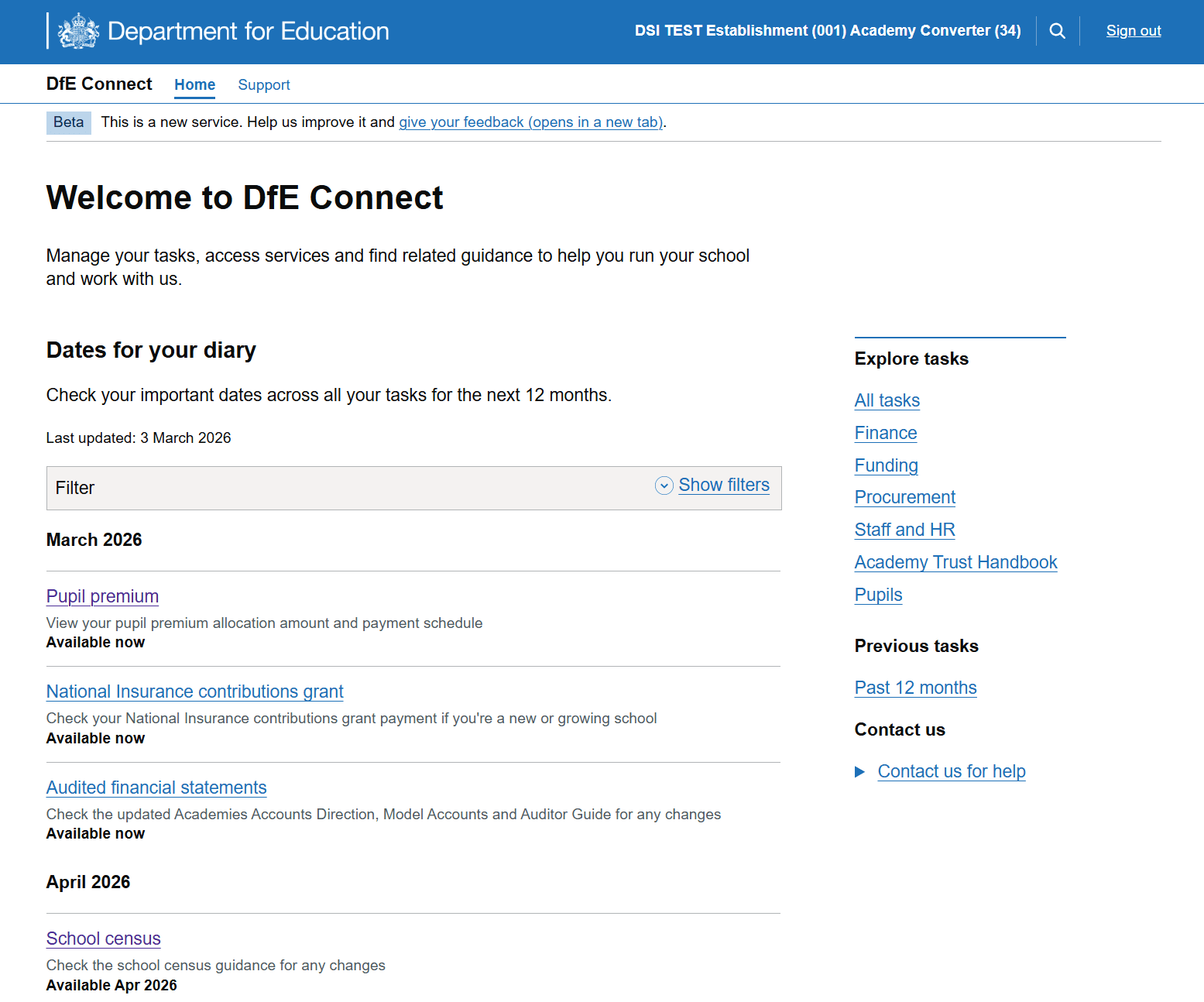
The current version of DfE Connect has been in beta for almost 2 years but has been unable to meet core user needs or business objectives.
It’s a compromise based on what was technically possible at the time, rather than what tested well or met user needs. Further, there was little exploration or iteration beyond the calendar list of tasks.
While DfE Connect is not delivering the impact we expect now, there’s still a huge opportunity to make things better for school leaders and for the department.
What’s changed since then
A lot of content and design work has been done and tested but not implemented, while there are other areas we believe could be valuable to users that have not been explored and are potential opportunities.
Clear content architecture recommendations have formed over the last 3 years that could be used as a starting point, and data sources and APIs now exist for some content that we could not use before (which might help us create more personalised, relevant, and valuable designs).
We believe the core discovery insights are still valid, but moving back to an alpha phase will allow us to build and test new concepts, designs and hypotheses that better meet school and departmental needs.
It’s an opportunity to find the right solution for users, while identifying a technical approach that’s scalable, maintainable, and aligned to wider DfE tech architecture standards.
The firebreak sprint
In February, we had a 2-week firebreak sprint to take stock of what needs attention and how we might move forward. We used this time to:
- pause delivery to understand recent changes and their impact
- review what we’ve learned from discovery and alpha
- protect dedicated time for planning and alignment
- improve and adjust ways of working
- prepare key artefacts and foundations for the next phase
- align the team on priorities and direction
Why DfE Connect is not working
User numbers and returning users are low and the team has not been confident in the product meeting needs, leading to a reluctance to roll out or increase the user base.
In the meantime, the current design is not scalable, and has prevented rapid iteration. We have been unable to deliver any continuous improvement releases for the past 6 months. It also takes substantial time to onboard new services to Connect.
Then there are wider problems to solve – guidance is difficult to find and understand, there are too many portals and accounts and overwhelming volumes of emails.
We know users:
- have difficulty understanding what to do and when, for example, with changes to policy and guidance
- are worried about missing out on opportunities
- lack confidence about whether a task has been completed
Alpha goals
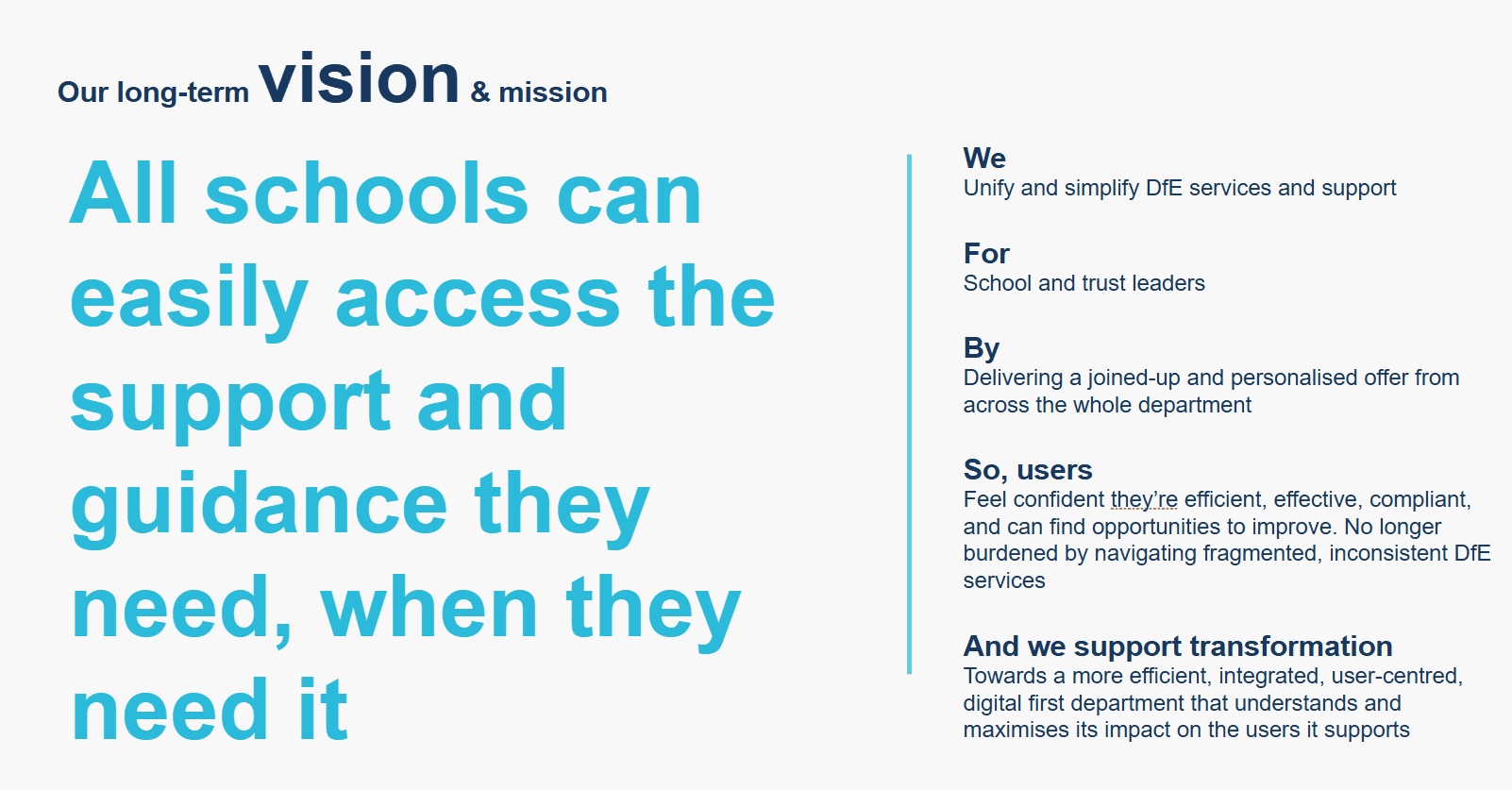
Our aim for DfE School Account is to give school and trust leaders a single, personalised place to access DfE services, receive tailored guidance, updates and opportunities – all based on their context, responsibilities, and priorities – helping them make confident decisions and take timely action.
We want to reduce the burden on school and trust leaders so they can focus on education, while supporting the department in delivering services more efficiently and in a more joined up way.
The journeys we’ll explore
We decided to explore a small number of end‑to‑end journeys in depth. These journeys will be baselined and used as practical tools to uncover common patterns, surface shared pain points, and then test potential approaches.
We chose three journeys to give us a spread of mandatory, conditional and optional tasks, as well as tasks that take place frequently and others, less so.
We’ve chosen the following:
School Census because it’s mandatory, deadline driven, occurs frequently and there's a high DfE spend on ensuring this is completed.
Energy for Schools, which is optional, because it’s a great chance to look at maximising value for schools and an opportunity to explore awareness and uptake.
Breakfast clubs grant because it uses an expression of interest, an approval process and then the application itself. Again, it’s also a chance to study eligibility awareness and understanding.
We’re reviewing these three services to build a clear picture of the current user experience, understand pain points, and identify cross-cutting themes.
This will help us pinpoint opportunities and shape potential solutions for School Account. We’ll take this preparatory work into a focused 3-day design sprint at the end of April.
There’s more information about the planning, rationale and goals of the alpha in this deck.