
Background
Our previous design history post on disclosing previous ITT covered the self-declaration journey we added to the safeguarding section of Apply. We now ask candidates to let us know if they have previously started an initial teacher training course at another provider.
At the end of that post, we identified two areas to explore next:
- using data from Register trainee teachers to highlight potential non-disclosure of previous ITT to providers
- allowing candidates to add more than one previous course
This post covers changes to both.
Using Register data to flag potential non-disclosure
Why self-disclosure alone isn't enough
The self-declaration journey can only capture what candidates choose to share. When a candidate doesn't disclose a previous course, our previous process was to manually identify them using Register data and email the relevant training provider.
This was time-consuming and prone to human error. It could also happen well after a provider had already reviewed an application or made an offer.
What we built
We now automatically cross-reference candidate data against the Register trainee teachers dataset. When we identify a candidate who may have previously started ITT but hasn't disclosed it, we flag this to providers on their application in Manage.
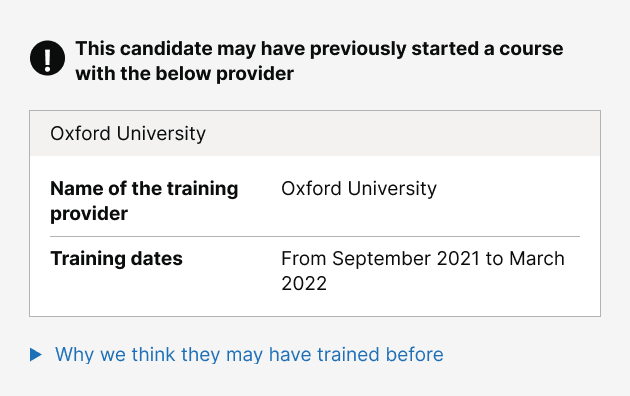
The flag tells providers why we think the candidate may have previously trained and what steps they should take to look into it. Providers are urged not to make a decision, but to start their own investigation.
Why we didn't flag candidates first
We considered an alternative approach that involved flagging a match to the candidate in Apply and giving them a chance to disclose before notifying their provider.
We didn't go down this route for two reasons:
- Journey complexity - Inserting a new step into the application journey, one that appears conditionally and mid-flow, added significant design and technical complexity for an uncertain return.
- Data protection risk - Our matching process carries a risk of false positives. Telling a candidate that we believe they have previously trained, when they haven't, would be distressing and potentially raise data protection concerns. Flagging the match to providers, who can investigate before acting on it, is a safer approach.
Allowing candidates to add multiple courses
Why we made this change
When we launched self-disclosure, we knew the design only supported one previous course. We told candidates to mention any additional courses in the free-text details field.
Support requests confirmed that some candidates had more than one previous course to declare and the single-course design wasn't working for them.
The free-text approach also meant that we couldn't cross-reference multiple declared courses against Register records; instead, we needed structured data to do that reliably.
When the development team built the data model for the first release, they structured it to accommodate multiple courses. Adding the UI to support this was therefore straightforward.
What we built
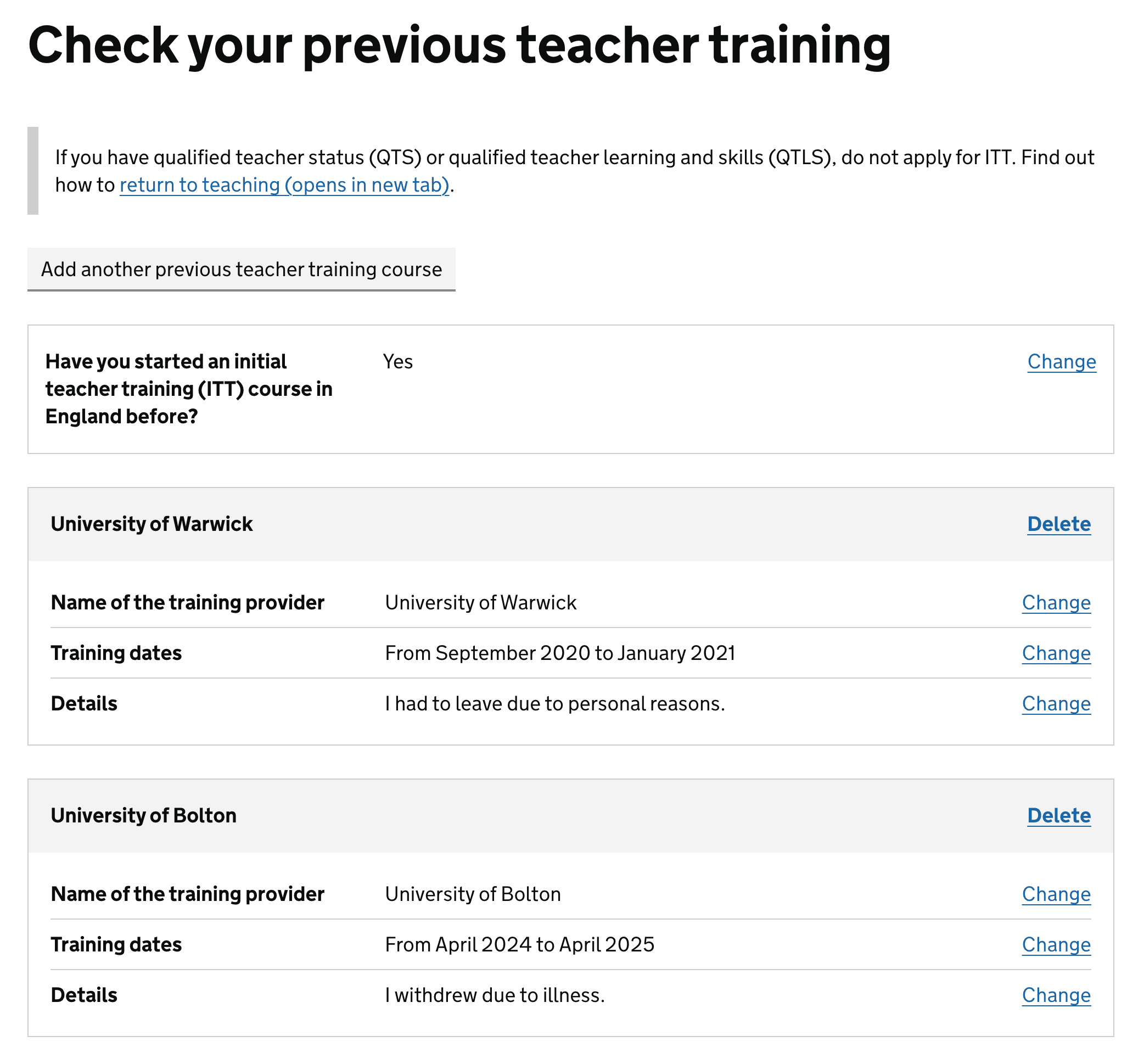
We replaced the implicit 'mention it in the details box' workaround with an explicit 'add another course' journey. Candidates can now add each previous course individually, with the same structured fields for each entry.
Next steps
We will monitor the impact of these changes. This includes analysing support requests to see if it is clear to providers what they need to do and logging any reports of false matches.