
During alpha, we tested the end-to-end service with early years teachers and managers from a range of settings across England.
One area where users consistently paused was the employment evidence upload step.
Understanding the problem
Our initial designs gave users multiple options for the types of evidence they could provide.
During research, we observed users spending time deciding which document would be most appropriate. Some participants questioned whether they had chosen the correct document, while others considered uploading multiple documents to increase their chances of success.
This uncertainty created unnecessary friction in the journey and reduced confidence at a key point in the claim process.
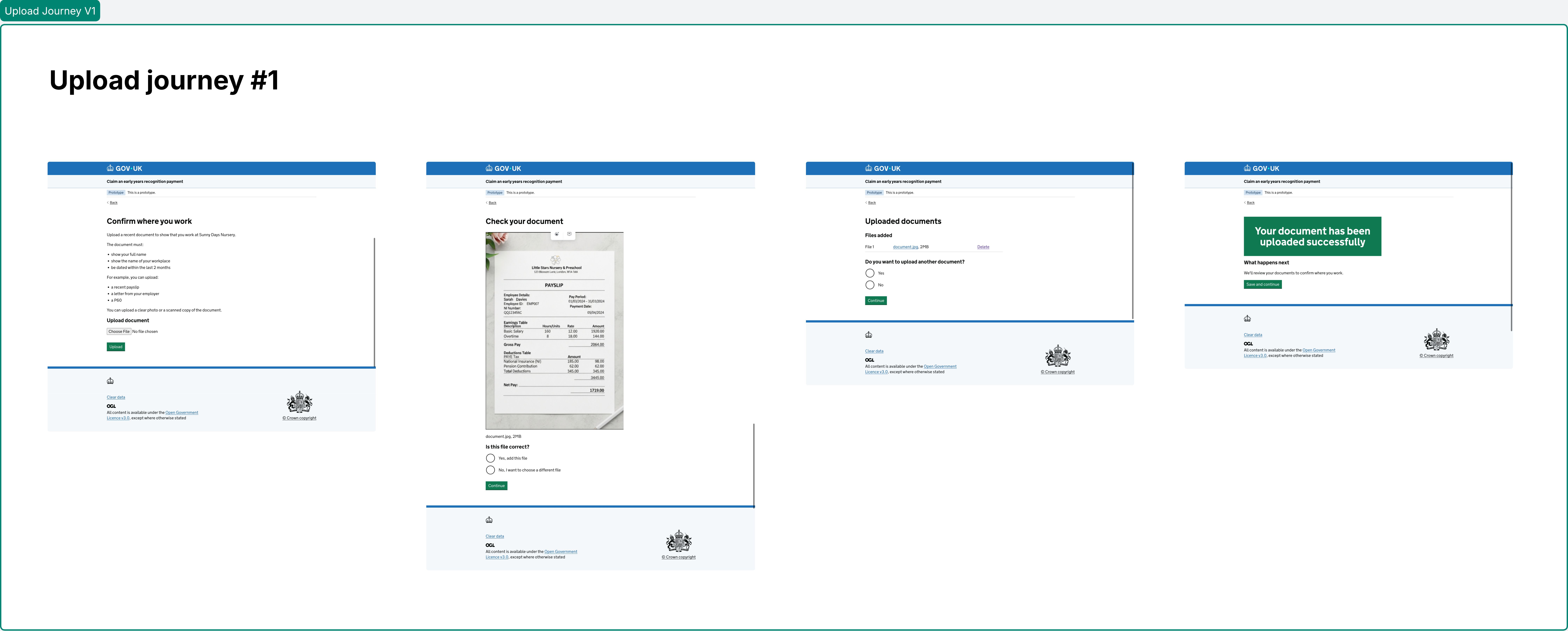
Simplifying the evidence upload journey
Between rounds of user research, we iterated the upload experience based on what we had observed.
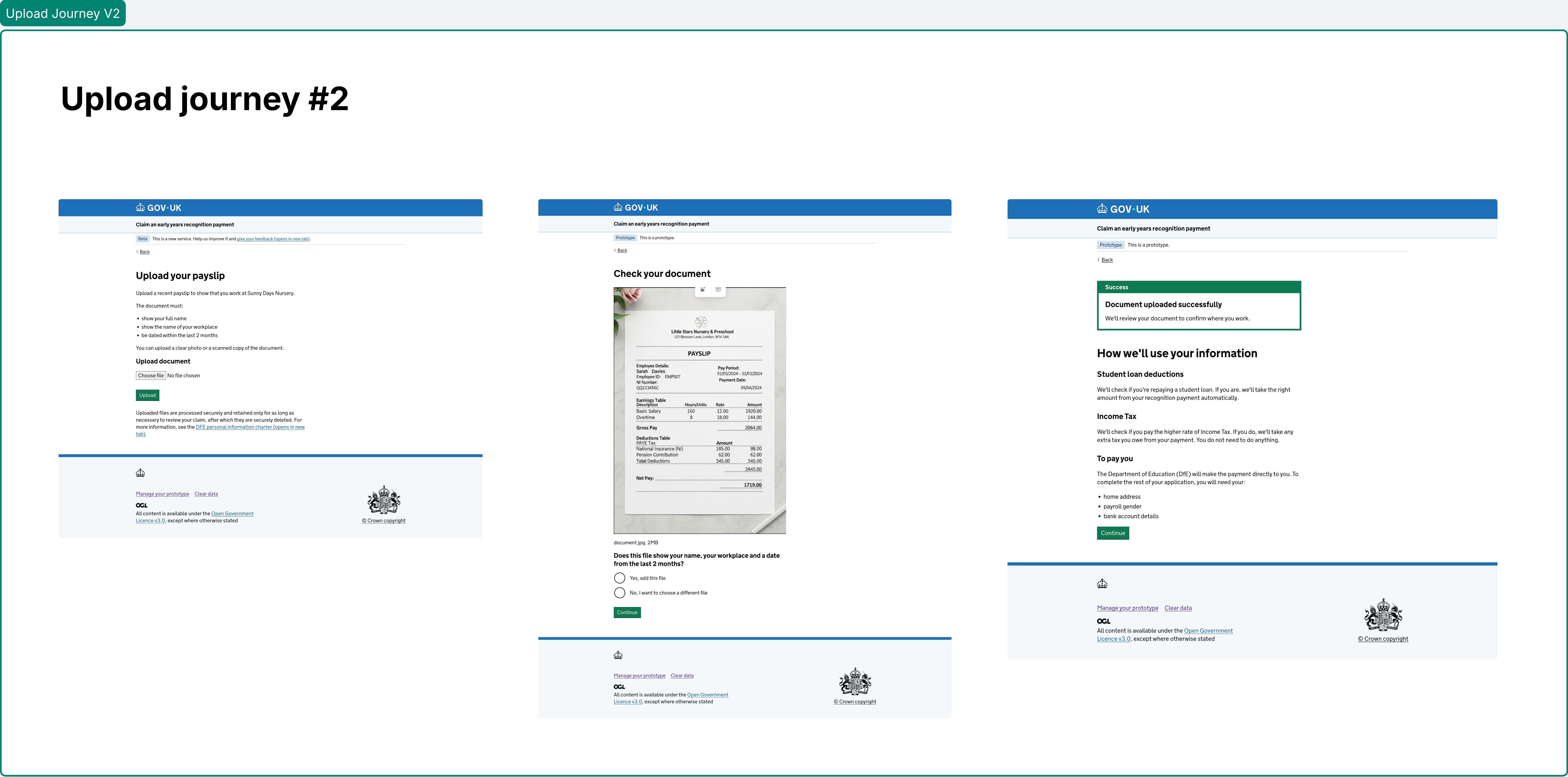
Rather than presenting multiple options, we focused on a single document that most users were likely to have available: a payslip.
We also simplified the supporting content and reduced the amount of information users needed to process before uploading their evidence.
The aim was to help users make a decision quickly and confidently without needing to interpret detailed evidence requirements.
What we learned
In the second round of research, users moved through the upload step more confidently and with less hesitation.
By reducing the number of decisions users needed to make, we were able to simplify the experience and help users focus on completing their claim.
The change may also benefit operational teams. If users are more likely to upload the correct evidence first time, there should be less need for follow-up requests and manual intervention during claim processing.
We’ll continue to monitor evidence submission and processing during private beta to understand whether these improvements lead to better outcomes for both users and caseworkers.